Amazon Mechanical Turk Is Shutting Down on September 30, 2026
 by ahsan
August 27, 2026
5 min read
by ahsan
August 27, 2026
5 min read
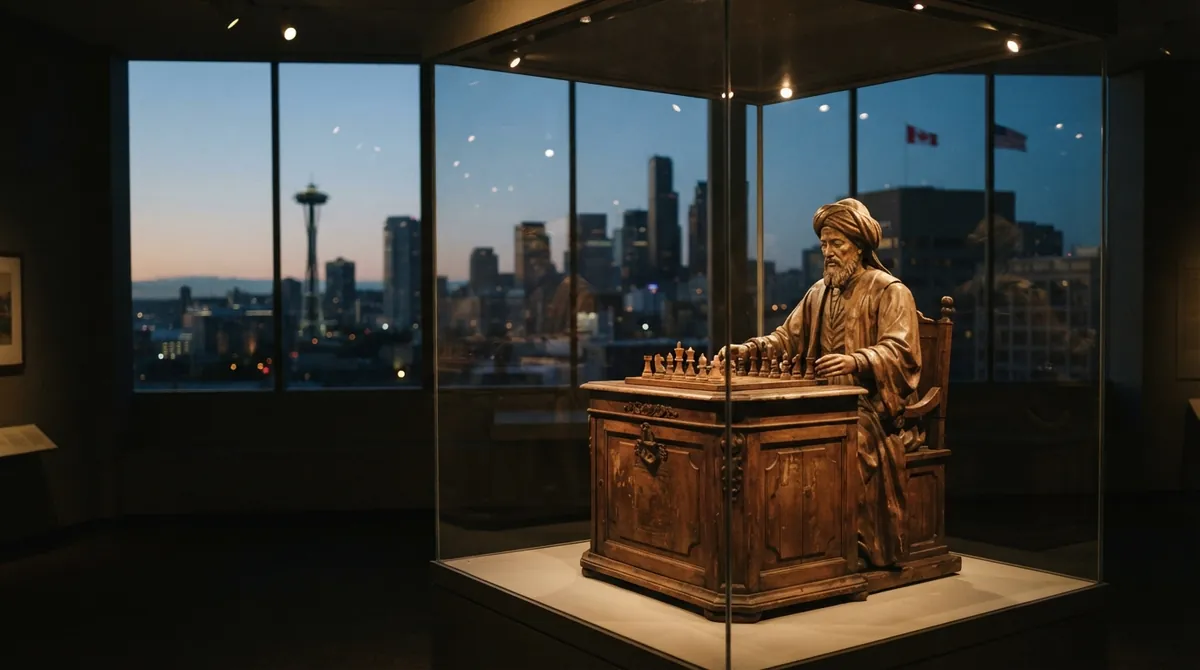
A wooden chess player toured Europe in 1769, astonishing audiences with its apparently mechanical skill. The cabinet was filled with gears, but the real secret was a human chess master hidden inside. Amazon borrowed that name for a service built around a similar contradiction: software could call on human judgment when computers reached their limits.
That experiment is coming to an end. Amazon Mechanical Turk, commonly called MTurk, will permanently close on September 30, 2026. Amazon says the decision followed an assessment of its programs, tools, and services. The announcement does not give a more detailed reason, and it does not claim that artificial intelligence has made human work unnecessary.
The closure follows an earlier July 30, 2026 change that stopped new-customer access. Now the remaining workers, requesters, researchers, and developers have a short window to finish work, collect records, and redesign systems that depend on the marketplace.
What MTurk actually was
MTurk was a crowdsourcing marketplace. Crowdsourcing means dividing a project among many people on the internet instead of assigning the entire job to one employee or contractor. The individual pieces were called microtasks: small jobs such as checking a product category, transcribing a short audio clip, answering a survey, or marking objects in an image.
The businesses and researchers who posted work were called Requesters. The people who completed it were Workers. A single job was known as a Human Intelligence Task, or HIT. A HIT might contain instructions, an input file, a reward, a deadline, and rules describing which Workers were qualified to accept it.
For developers, MTurk was more than a website. It also exposed an application programming interface, or API, which is a set of rules that lets one program communicate with another. A system could create HITs, collect submissions, approve answers, and place the results into a larger workflow without requiring a person to copy and paste everything by hand.
This small example shows the idea. It is pseudocode, not a ready-to-run MTurk program:
for image in images:
 hit = create_hit(
 prompt='Draw a box around every bicycle',
 reward=0.05,
 assignments=3
 )

 answers = collect_submissions(hit)
 label = choose_consensus(answers)
Here, assignments=3 means that three Workers review the same image. The system can compare their answers and select a consensus, meaning a result supported by multiple people. Repeating a task this way costs more, but it can reduce mistakes on subjective work.
Why machine-learning teams cared
A machine-learning model is software trained to recognize patterns from examples. Those examples need labels: a note saying that an image contains a bicycle, that a sentence expresses anger, or that a recording contains a particular word. Creating those labels is often slower than building the model itself.
MTurk supplied the human-in-the-loop part of that process. Human-in-the-loop means a person reviews, labels, or corrects an automated system at a defined point. In computer vision, for example, a Worker could draw a bounding box, a rectangle around an object, so a model could learn where cars appear in street images. In a review system, a person might inspect uncertain predictions before they reach a customer.
The same pattern worked outside machine learning. Companies used microtasks for data collection, duplicate detection, product and image categorization, surveys, research, and content moderation. MTurk did not remove the need for judgment. It made that judgment available through a repeatable technical interface.
The shutdown is a software migration problem
So what does the Mechanical Turk shutdown mean for workers and developers? For a Worker, it is a deadline involving earnings and account settings. For a Requester, it is also a dependency removal.
A production integration may assume that it can create a HIT, wait for a submission, receive a result, and move the item through states such as approved, rejected, or expired. It may also store Worker qualifications, assignment IDs, quality scores, and payment records. Once MTurk disappears, those assumptions stop at the marketplace boundary.
Teams should map that entire path rather than replacing one API call and hoping the rest continues to work. A new provider may use different task identifiers, worker pools, approval rules, privacy terms, and result formats. A specialist data-labeling vendor, private workforce, internal review queue, or another marketplace may fill the role, but none should be treated as a drop-in replacement without testing.
The change reaches into Amazon Web Services, Amazon's cloud-computing division, as well. Amazon says the MTurk Worker type will no longer be available in Amazon SageMaker Ground Truth and Amazon Augmented AI. Ground Truth is used to build labeled datasets, while Augmented AI supports workflows in which people review machine-learning predictions. The surrounding AWS services are not the same thing as MTurk, but their MTurk-based worker option is being removed.
The dates that matter
- September 30, 2026: MTurk permanently closes. HIT submission ends, and any remaining unsubmitted HITs automatically expire.
- October 30, 2026: Requesters can continue approving or rejecting submitted work during the 30-day post-closure window. Bonuses can also be awarded until this date. Work left without action is automatically approved under the standard rule.
- Within 30 days after closure: Prepaid Requester balances are expected to be refunded, provided payment information is correct. Final AWS-billed charges will appear during the normal upcoming billing cycles.
- January 28, 2027: Transaction history remains available until this date. Afterward, the portal should not be treated as an archive.
What Workers should do now
Workers should verify both their payment method and transfer frequency in the MTurk Worker Portal. Amazon says approved HITs will continue to be paid according to the existing disbursement schedule, and tax documents will still follow the established processes and deadlines.
It is also wise to keep personal records of earnings, pending submissions, approvals, bonuses, and tax paperwork before the service closes. Payment problems are much harder to resolve when the only copy of a record lives inside a service that is being retired.
What Requesters should do now
Requesters should verify their payment information, review open HITs, and export important results and transaction records. MTurk normally removes HITs and associated assignment data after 120 days, so waiting for the final shutdown can create an avoidable data gap.
The technical migration should include a small test project. Compare the new workflow's label quality, agreement between reviewers, turnaround time, cost, and handling of rejected work. Also review whether the replacement can support the same privacy boundaries; MTurk was a public crowd marketplace and was not designed for personally identifiable or sensitive data.
Mechanical Turk began as a strange but productive idea: a computer could request help from people and fold their answers back into software. Its closure ends one of the best-known implementations of that idea, but not the need behind it. Models still need carefully labeled examples, uncertain decisions still benefit from human review, and the next generation of tools will have to build those human steps into their systems in a different way.
Comments (0)
No comments yet. Be the first to respond!
Leave a Comment
Your comment will be visible after review.