Beyond the Scan: How VGHF Made 5,000 Game Magazines Searchable
 by ahsan
October 04, 2026
6 min read
by ahsan
October 04, 2026
6 min read
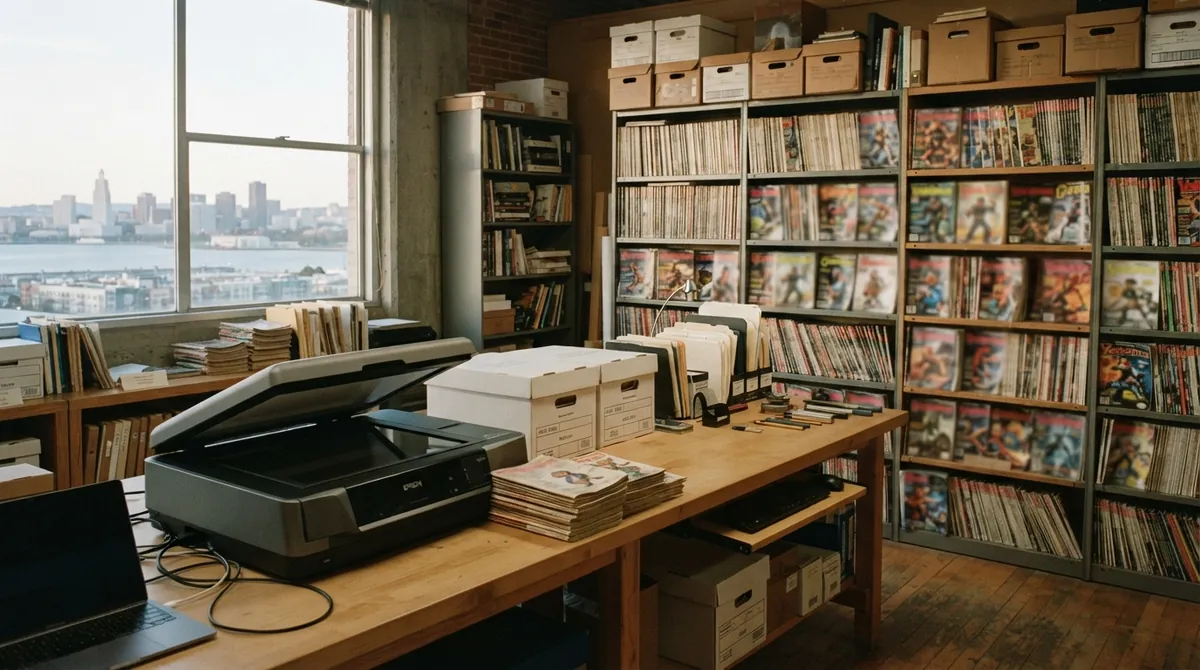
Picture trying to verify one sentence about a 1990s game. The clue might be buried in a tiny review box, a publisher advertisement, or a developer interview in a magazine you have never held. In a physical library, that hunt means opening issue after issue. In a searchable archive, it can begin with a phrase.
On September 24, 2026, the Video Game History Foundation announced that its digital archive had passed 5,000 magazines and nearly 600,000 pages, spanning video game history from 1981 through 2026. The collection began early access on January 30, 2025, with more than 1,500 full-text-searchable magazines. The impressive part is not only how quickly the collection grew, but how much technical work sits between a paper page and a useful research result. (gamehistory.org)
A scan is not yet a research tool
A digital scan preserves the appearance of a page. You can zoom in, read the article, and keep a fragile magazine from being handled repeatedly. But an image alone does not tell a computer that a headline contains a game title or that a caption mentions a particular developer.
That is where optical character recognition, usually shortened to OCR, enters the story. OCR is software that examines an image and guesses which shapes represent letters and words. A searchable archive adds that recognized text as a hidden text layer, allowing a search for a game, company, or person to lead back to the original page. The VGHF Digital Archive is designed around this kind of full-text discovery rather than treating each magazine as a folder of disconnected images. (archive.gamehistory.org)
A useful way to picture the process is:
magazine scan
 ↓
script-aware OCR
 ↓
recognized words + page coordinates
 ↓
metadata + language tags
 ↓
search index
 ↓
human review
The phrase “page coordinates” matters. Text mapping connects each recognized word to its position on the original page. When a search result highlights a sentence inside a column, advertisement, or vertical caption, the archive is not merely returning a block of extracted text; it is pointing you toward evidence in its original visual context.
Video game magazines are difficult material for this kind of system. They mix narrow columns, decorative fonts, screenshots, colored backgrounds, tiny captions, review scores, and advertisements that were never designed for machine reading. A PDF that opens in a browser is not automatically a reliable research source. The text must be discoverable, the page order must make sense, and the search result must remain connected to the scan a researcher needs to inspect.
Why Japanese magazines force better design
How do you make old video game magazines searchable when the page was designed to resist search? The VGHF’s Japanese-language pilot provides a useful answer.
The first featured publication is Neo Geo Freak, which covered Neo Geo home and arcade platforms from 1995 through 2000. It is a fitting test case because the magazine offers sustained coverage of a platform and player culture that received very different attention outside Japan. Its pages also contain the kind of interviews, fan scenes, and local context that can disappear when researchers rely only on English-language publications. (gamehistory.org)
Japanese pages bring several complications at once. A single issue may combine kanji, hiragana, katakana, Latin letters, and stylized game titles. Text may run vertically, page layouts may follow a right-to-left reading order, and Japanese writing normally does not separate every word with spaces. An OCR system trained around English assumptions can produce text that looks plausible while making search results incomplete or difficult to interpret.
For the pilot, VGHF worked with peers and professional archivists in Japan to choose methods for Japanese script recognition. Those methods were integrated into the foundation’s existing text-mapping tools, then checked with researchers who regularly use Japanese historical materials. The archive also added language filtering, right-to-left page layouts, and search behavior that does not depend on spaces between words. Existing Japanese promotional materials, including FromSoftware items, were reprocessed to meet the same standard.
Searchability does not mean translation
There is an important distinction between making a magazine searchable and translating it. VGHF did not attempt to machine-translate the entire roughly 10,000-page run of Neo Geo Freak. Instead, Japanese-fluent volunteers created English indexes of major articles and interviews across the complete run.
That index acts like a map. An English-speaking researcher can discover that an issue contains a developer interview or a feature about a particular game, then open the original page and translate the passage with the tool of their choice. The approach preserves the source material instead of presenting an automated translation as if it were a perfect substitute for the original language.
A practical research workflow now looks something like this:
- Search for a game, person, company, or Japanese title.
- Filter results by language, publication, or date.
- Open the page hit and compare the OCR highlight with the scan.
- Record the issue, publication date, page number, and surrounding context.
That final step is easy to overlook. Finding a phrase is not the same as understanding it. A review score may belong to a sidebar, a quote may continue on the next page, and an advertisement may reveal what a publisher wanted players to believe at the time. Search gets you to the page; historical judgment still begins there.
The archive is a pipeline, not a pile
The growth of the magazine collection also shows why preservation depends on collaboration. VGHF says roughly one-third of the magazines in the digital archive were digitized by the foundation itself, while the rest came from community scanning projects, industry partners, alumni, and individual contributors. Community groups often possess the rare scans; an institution can add consistent cataloging, preservation systems, text mapping, and a public search interface.
That cataloging layer is known as metadata: descriptive information such as a publication name, issue date, language, series, and subject. Provenance, meanwhile, records where an item came from and how it entered the collection. These details may feel less exciting than a newly discovered screenshot, but they are what allow another researcher to trust, locate, and cite the material later.
VGHF’s broader library uses ArchivesSpace and Preservica alongside custom tools for recognition and discovery. The archive has already become a major reference point for out-of-print game magazines, with the foundation reporting more than 500 Wikipedia citations. That is a sign that the collection is moving beyond nostalgia browsing and becoming part of the evidence layer used to explain game history.
What comes after 5,000 magazines
The next challenge is scale without losing accuracy. VGHF says it is planning another batch of roughly 70,000 pages in the coming years. Each page must move through scanning, image preparation, OCR, layout mapping, metadata creation, quality checks, and public delivery. Japanese material adds language expertise and careful indexing to that pipeline.
The foundation describes the library as a permanent work in progress: not every holding has been cataloged, and not every cataloged item has been digitized. That is a healthier expectation than pretending any archive can be finished. A research library grows through repeated passes, better tools, corrected records, and the contributions of people who know what a page means. (archive.gamehistory.org)
Passing 5,000 magazines is therefore more than a storage milestone. It marks the point where old game publications can be searched across languages, checked against their original layouts, and connected to the wider history around them. The scan preserves the page. The archive makes the page findable. Human context is what turns it into history.
Comments (0)
No comments yet. Be the first to respond!
Leave a Comment
Your comment will be visible after review.