Dollar-for-Dollar Tariff Matching: The Math Behind Retaliation
 by ahsan
August 22, 2026
6 min read
by ahsan
August 22, 2026
6 min read
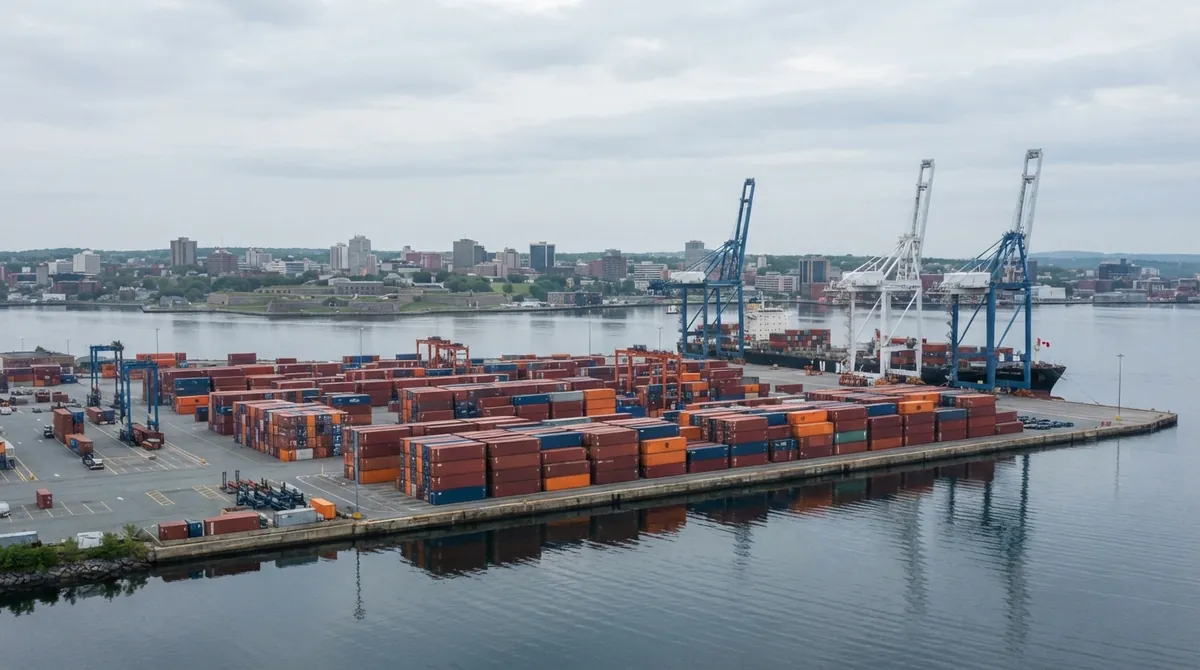
On a normal week, a cross-border supply chain feels almost boring: purchase orders flow, containers clear customs, invoices arrive, and everyone moves on to the next shipment. Then a trade headline drops and suddenly the “boring” parts get loud. Tariffs start acting like a tax knob—one you can’t ignore—especially when a government says it will “match” another country’s tariffs dollar for dollar.
That phrase sounds political, but it has a technical meaning too. What does “dollar-for-dollar” actually mean in numbers, and how would governments (and businesses) estimate the impact? Let’s treat tariffs as what they really are in economic systems: a controllable percentage applied to the value of traded goods.
Tariffs as a simple equation (that businesses must operationalize)
A tariff is a tax charged at the border on imported goods. One common form is an ad valorem tariff, meaning “by value.” In plain language: if a product costs $100 and the tariff rate is 10%, the additional border tax is $10.
Mathematically:
- Let V = the customs value of the imported goods (how much they’re worth for tariff purposes)
- Let t = the tariff rate (for example, 0.50 for 50%)
- Then duty (the tariff amount paid) is:
duty = t × V
Now picture the headline scenario: one country announces a big ad valorem increase for a large category of goods, and the other country responds with “dollar-for-dollar” matching. That suggests the responder wants the economic burden of the retaliation to land at about the same magnitude—measured in dollars—rather than just copying the same percentage rate.
“Dollar-for-dollar” is a matching target, not a magic label
Here’s the key technical idea: matching dollar-for-dollar means matching dollar amounts of tariff revenue or tariff cost—not necessarily matching tariff rates.
There are two common interpretations, and governments could choose either depending on the political goal and the administrative constraints:
1) Rate matching (same percentage, same base)
If both sides apply the same tariff rate to a similar customs value base, the dollar outcomes tend to align.
2) Dollar matching (same dollar target, flexible base or rate)
The responder calculates the dollar amount it expects to be hit by, then selects its own tariff rate and/or the value base of retaliatory imports so the retaliation totals roughly that dollar amount.
Rate matching is easier to explain. Dollar matching is closer to the underlying “fairness” claim: the retaliation’s impact is designed to scale to the other side’s move.
A concrete back-of-the-napkin example
Suppose a country imposes a 50% tariff on goods with $28 billion in customs value.
- Duty imposed = 0.50 × $28B = $14B
If the other country retaliates “dollar for dollar” with an equivalent structure, it might aim for its retaliation to also be about $14B in additional duty.
In code terms, the matching target looks like this:
V = 28_000_000_000
t = 0.50
imposed_duty = t * V
matching_target = imposed_duty
matching_target
That’s the simple part.
The tricky part is reality: customs values, product mix, exemptions, and shipment timing rarely stay perfectly constant once tariffs hit.
Why the math gets messy in the real world
Even if the initial plan is “match $X in tariffs,” at least five real-world factors can pull the final dollar totals off target.
1) Customs value isn’t the same as purchase price you see in marketing
Customs value is the value used for tariff assessment, and it can differ from what businesses think the “price” is. It may include shipping and related charges depending on the rules.
So two companies can report the same invoice amount while producing different customs values, which changes duty.
2) Trade flows shift after tariffs
When tariffs rise, importers often:
- reroute orders,
- switch suppliers,
- change product specifications,
- or delay shipments.
That means the V in the equation can shrink—or sometimes grow—depending on what substitution is possible.
3) Exchange rates can blur the dollar picture
Tariffs are calculated using local valuation rules and reported in domestic processes. If currency values move quickly, the “same dollars” claim becomes harder to match precisely.
4) Pass-through isn’t guaranteed
Businesses and economists talk about pass-through: how much of a tariff ends up in the final price. If a seller absorbs some of the tariff margin instead of passing it fully to buyers, the economic burden doesn’t map cleanly to the border duty number.
Governments, however, still measure the policy effect at the border. Businesses feel the effect in contracts, margins, and price lists.
5) Product classification and exemptions can make two “similar” goods legally different
Customs systems classify goods into categories (for example, under national tariff schedules). If goods move into a different classification, they can face different rates or eligibility rules.
So the “same $28B of goods” story may not survive contact with paperwork.
The bargaining side: tariffs as leverage in a game
There’s also a strategic layer. Tariffs aren’t only accounting entries; they’re credible signals in a negotiation.
In game theory (the study of strategic decision-making), the core tension looks like this:
- The country imposing tariffs wants its partner to view the cost of not conceding as high.
- The country retaliating wants the partner to see retaliation as likely, proportional, and sustainable.
“Dollar-for-dollar” messaging tries to make retaliation feel less arbitrary. It suggests the responder has done the bookkeeping and can keep up the counter-pressure.
Is that how it plays out perfectly? Not usually. But the credibility signal matters, because expectations shape business planning long before any final agreement lands.
Operational reality for businesses: planning under tariff uncertainty
When tariffs threaten a large slice of imports, procurement and finance teams typically move from “estimate” to “scenario.” That’s where some technical tools help—even for beginners.
Scenario analysis (the simplest form of uncertainty planning)
Scenario analysis means running multiple plausible futures. For instance:
- Scenario A: tariffs hold steady at the announced rate and base
- Scenario B: exemptions expand
- Scenario C: trade flows reroute and the tariffed customs value drops 30%
Each scenario produces a different expected duty and different downstream costs.
Monte Carlo simulation (optional, but powerful)
A Monte Carlo simulation is a technique that repeatedly samples uncertain inputs from probability ranges and computes outcomes many times. Instead of guessing a single customs value or pass-through rate, you model uncertainty as distributions.
That can produce a “range of outcomes” for duty exposure rather than a single number that turns out wrong the day shipments change.
So why match dollar-for-dollar at all?
Because it’s an attempt to align policy intent with measurable burden.
Tariffs are percentage taxes, but the consequences show up in dollars: cash flow timing, inventory valuation, contract renegotiations, and margin forecasts. A dollar-for-dollar response is a way to say: “We’re not only reacting—we’re calibrating.”
A grounded takeaway
Even when the headline sounds like pure politics, tariff matching is a system design problem. The moment the tariff knob turns, the equation duty = t × V becomes real for customs declarations and procurement spreadsheets.
And “dollar-for-dollar” is best understood as a target function under uncertainty: match the expected dollar burden, even though the world keeps moving—shipping routes, classifications, exchange rates, and prices all drifting away from the initial plan.
That’s the part that always surprises people the first time they look under the hood: tariffs may be announced as policy, but they behave like parameters in a constantly updating model of trade.
Comments (0)
No comments yet. Be the first to respond!
Leave a Comment
Your comment will be visible after review.