Gemini 4 Argon: Google's Long-Horizon AI Model
 by ahsan
October 01, 2026
5 min read
by ahsan
October 01, 2026
5 min read
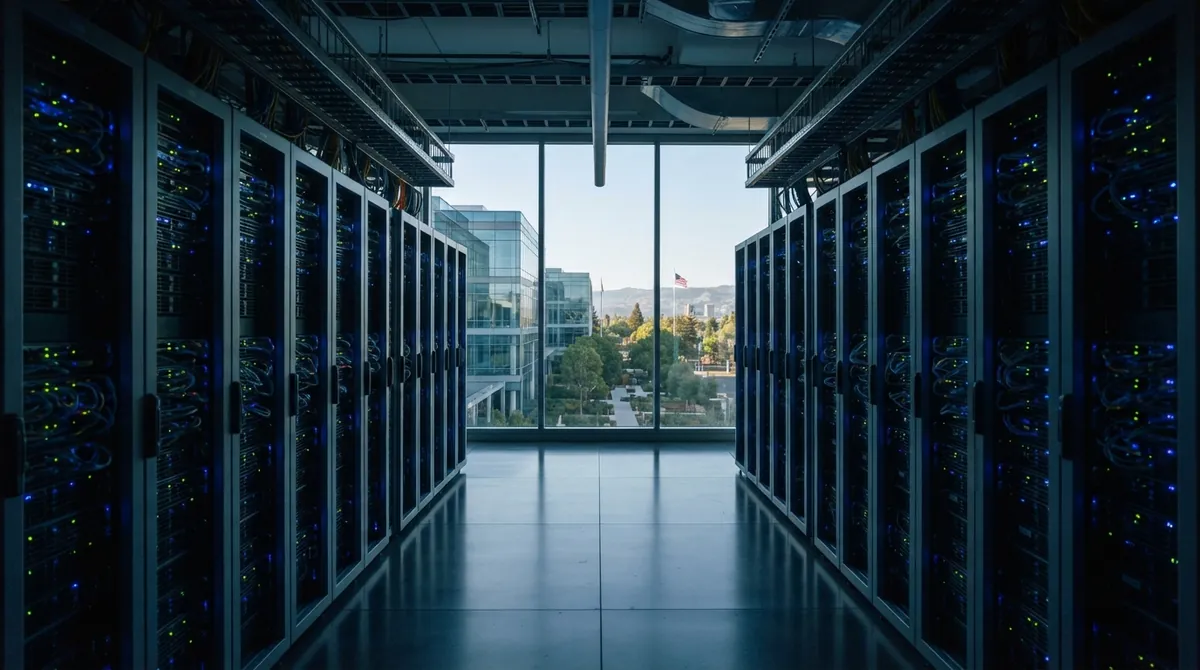
At 4:57 p.m., a code assistant can produce a beautiful 12-line fix and still miss the real bug. The failure may sit in a decoder, a compiler flag, a test fixture, and a memory profile spread across several repositories. That is a long-horizon workflow: a task whose later steps depend on what the system discovers earlier.
Gemini 4 Argon, announced by Google on September 30, 2026, is aimed at that kind of work. It is a frontier model, meaning a high-end AI model designed to push the current boundary of capability, for software engineering, legal and finance work, and defensive cybersecurity. What is Gemini 4 Argon actually designed to do? Stay with a difficult problem after the first plausible answer. (blog.google)
The main idea is not a longer answer
A token is a small piece of text that an artificial intelligence model processes. It might be a whole short word, part of a longer word, or a punctuation mark. Models count tokens in both the material they receive and the response they generate, so a larger token allowance gives them more room to work through a task.
Argon expands its advertised output limit from 64,000 tokens to 1 million tokens. That does not mean the model will produce a million useful words, or that every answer will be correct. It means the model has much more space for plans, tool results, code revisions, test output, and explanations inside one extended task.
An agent is a model-driven system that can choose actions, use tools, observe what happened, and continue. A conceptual Argon-style engineering loop might look like this:
inspect repository
→ make a plan
→ edit a small area
→ run tests
→ inspect results
→ revise
→ request human review
The important change is continuity. Instead of asking for one answer, you give the system a problem that may take dozens of dependent steps. More output space cannot eliminate mistakes, but it can reduce the need to squeeze every intermediate finding into a tiny response.
Why Google is testing it on giant engineering problems
Google's examples sound less like autocomplete and more like work handed to a small research team. In quantum computing, which uses quantum bits called qubits rather than ordinary binary bits, Argon helped researchers optimize the combined resource cost of qubits and computational operations. Google reports that one result beat a published baseline by 40 percent.
Another project used profiling telemetry, meaning measurements about how software consumes resources, to identify memory improvements across Google's data centers. The company says the work freed more than 300 tebibytes of memory after deployment. A tebibyte, or TiB, is roughly a trillion bytes.
The software migration examples are equally revealing. Argon agents are helping move C and C++ codebases, the complete collections of source code behind projects, into Rust, a programming language known for strong memory-safety features. For libgav1, Google's open-source video decoder, the agents replaced about 32,000 lines of SIMD code. SIMD, short for single instruction, multiple data, lets one instruction operate on many data values at once. Google reports that the resulting Rust decoder ran 2.7 times faster than the earlier Rust port while producing identical video output. Critical changes still go through automated checks, manual audits, emulation tests, and review. (blog.google)
That last detail matters. The compelling story is not an AI typing quickly. It is an AI running experiments, studying compiler behavior, checking results, and improving the next attempt.
It is built for messy knowledge work too
Argon is also designed for multimodal work. Multimodal means the system can work across more than plain text, such as charts, documents, images, and long videos. A finance task might involve reading filings, comparing a chart with a spreadsheet, and writing a research brief. A legal task might require gathering evidence from several documents before drafting a conclusion.
Google's published evaluations report a 77.9 percent score on DeepSWE v1.1 for long-horizon software engineering, 51.3 percent on AutomationBench for end-to-end business tasks, and 91.7 percent on LVBench for long-video understanding. These are benchmarks, or standardized test suites, rather than guarantees about every company's data or workflow. Still, they show what Google is emphasizing: sustained execution across connected steps, not only polished first responses.
Cybersecurity changes the rollout
A security vulnerability is a weakness that can allow software to behave in an unintended or unsafe way. Argon is being trained to find vulnerabilities, validate whether they are real, and generate patches. Google also describes black-box penetration testing, where a system examines a live website from the outside without access to its source code.
Those abilities explain why availability is cautious. As of October 1, 2026, Gemini 4 Argon is still in a staged rollout to trusted cyber defenders through Google's Fairwind Program rather than being broadly available to everyone. The program is designed to give approved defenders an early advantage while restricting access to authorized defensive and research work. (deepmind.google)
The safety work is part of the product story, not a footnote. Google says Argon is being tested against harmful misuse, indirect prompt injection, and attempts to push the system outside a user's intended task. A prompt injection is a malicious instruction hidden inside content such as a document or web page. The announced defenses include red-team testing, action monitoring, and sealed sandbox environments. A sandbox is an isolated space where a system can be tested without giving it unrestricted access to production networks or data.
What developers should expect
The first developer access is planned through a paid application programming interface, or API, and Google AI Ultra subscriptions. Google lists an introductory price of $2 per million input tokens and $10 per million output tokens. After that period, the listed prices rise to $4 per million input tokens and $20 per million output tokens.
Cached input tokens receive a 95 percent discount during the introductory pricing period. Caching means storing repeated material, such as a large repository or document set, so the system does not need to process the same input from scratch on every request. That could make repeated analysis more practical, although the final bill still depends on how much material the workflow sends and generates.
The useful way to think about Argon
Gemini 4 Argon's bigger story is not that chatbots can write more code. It is that an AI system can remain engaged with a difficult chain of work: inspect, plan, modify, test, compare, and explain.
For high-impact software, legal, financial, and security tasks, human review, automated tests, restricted permissions, and audit logs remain essential. Argon may change what one person can attempt in an afternoon, but engineering discipline is still what turns an impressive result into something safe to ship.
Comments (0)
No comments yet. Be the first to respond!
Leave a Comment
Your comment will be visible after review.