How ZuckOff Detects Camera Glasses Without Using a Camera
 by ahsan
September 21, 2026
5 min read
by ahsan
September 21, 2026
5 min read
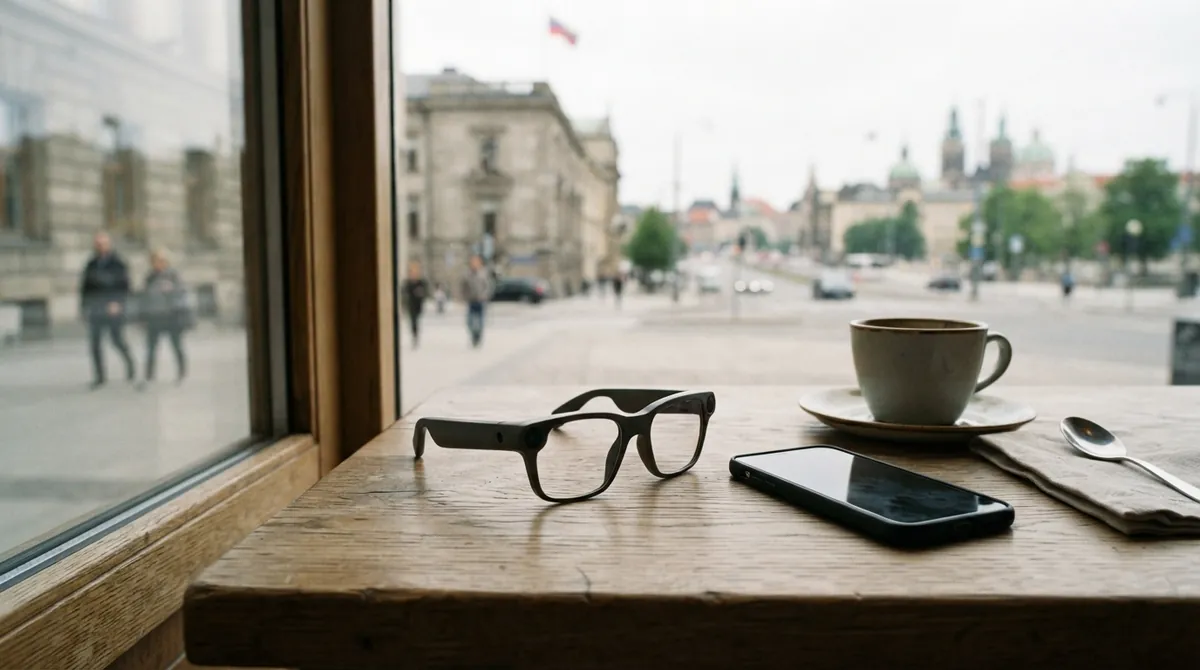
Picture a quiet meeting room. The frames in the next seat look ordinary, but you notice a tiny lens set into one corner and wonder whether it is active. That is the awkward gap ZuckOff tries to narrow: it cannot see through walls or tell you what another person intends, but it can listen for the small Bluetooth signals that many camera glasses use to talk to a phone.
By September 2026, the category is broad enough that this is no longer a science-fiction problem. Ray-Ban Meta Gen 2 and Oakley Meta models are sold as hands-free camera and artificial intelligence wearables, while Snap continues to support Spectacles as an augmented reality platform. The natural question is how an app can tell that camera glasses are nearby without looking at them. The answer is a layer of radio metadata most people never notice. (about.fb.com)
The trick is listening for a tiny broadcast
Bluetooth Low Energy, usually shortened to BLE, is a low-power radio system used by phones, watches, earbuds, and other small devices. Before a BLE device connects, it can send an advertisement: a short broadcast that says, in effect, I am here and these are some of my public capabilities. A phone scanning with its Bluetooth APIs can receive pieces of that broadcast without pairing with the device or opening its camera.
ZuckOff turns those broadcasts into records. It can see an advertised name when one exists, a manufacturer company identifier, service identifiers called UUIDs, signal strength, and the time a device was heard. The following is an illustrative record, not a raw packet:
company_id: 0x0D53
service_uuid: 0xFD5F
advertised_name: possible-glasses-name
rssi: -61 dBm
That is closer to a row of metadata than to a photograph. ZuckOff's scan record does not need a location coordinate, microphone input, or camera access to make its first assessment. (zuckoff.app)
Why the manufacturer signature matters
A manufacturer company identifier is a number assigned through the Bluetooth Special Interest Group, the industry body that maintains Bluetooth specifications and registries. A service UUID is another numeric label, this time for a service or function the device exposes. Device names are useful, but they are the least dependable clue: a name can be shortened, hidden, or changed.
The detection list behind ZuckOff combines these clues. Its current rules associate 0x0D53 with Luxottica hardware used in Ray-Ban Meta and Oakley Meta products, 0x058E with Meta Platforms Technologies, 0x03C2 with Snapchat, and 0xFD5F with a Meta-associated service UUID. Names such as Spectacles or other product labels can add context, but they carry lower confidence than a manufacturer signature captured from a real device. (bluetooth.com)
That distinction matters. A company identifier points to a maker, not a guaranteed model. The same vendor may sell several kinds of Bluetooth hardware. A careful scanner should therefore show why it raised a flag instead of displaying a dramatic red warning with no explanation.
A simplified version of that reasoning looks like this:
evidence = []

if company_id in [0x0D53, 0x058E, 0x03C2]:
 evidence.append(manufacturer_match)

if service_uuid == 0xFD5F:
 evidence.append(meta_service_match)

if name_matches_known_model:
 evidence.append(name_match)

confidence = score(evidence)
The important part is not the exact pseudocode. It is the habit of combining signals and exposing the evidence. That makes it possible to disagree with a result, report a false positive, or help add a new pair of glasses to the list.
RSSI can estimate closeness, not direction
Received Signal Strength Indicator, or RSSI, is a measurement of how strong a radio signal appears at the phone. Bluetooth scanners usually report it in decibels relative to one milliwatt, written as dBm. The values are negative, so a reading of -45 dBm is generally stronger than -80 dBm.
Stronger does not mean precisely five feet away. A person's body, a coat pocket, a metal table, a wall, and the angle of the glasses can all change the reading. ZuckOff can use a stream of RSSI measurements to describe a rough proximity band, but it cannot tell whether the glasses are behind you, across the room, or in the next room. That is why a trustworthy interface shows nearby or far rather than inventing an arrow. (developer.apple.com)
Presence is not proof of recording
This is the part worth keeping in view when an alert feels alarming. A detection means the phone heard a Bluetooth signature associated with supported hardware. It does not prove that the camera is powered, pointed at you, recording, or even being used by the person wearing it.
The reverse is also true. Silence does not prove that nobody is recording. Glasses tend to advertise more loudly while powering on, pairing, or leaving a charging case. Many continue advertising while worn, but standalone models can be quieter, and any device that is off, out of range, or not yet supported by the detection list may go unnoticed.
A capture light solves a different problem. Meta describes a front-facing LED for photos and videos saved to the glasses' gallery, while its current guidance also distinguishes some artificial intelligence camera features that may not activate that LED on newer models. Bluetooth detection and visible signaling are therefore two separate layers of context, not interchangeable proof. (zuckoff.app)
The privacy design is part of the product
A privacy tool becomes less convincing if it quietly turns into another tracking tool. ZuckOff's design is local-first, meaning the phone does the scanning and stores the log locally. Its policy says the app has no account or analytics and does not request location, contacts, photos, a microphone, or a camera. On iOS, the app stores an identifier issued by the operating system rather than the nearby device's Bluetooth MAC address.
The log can be exported as CSV when the user chooses to do so. A hardware report is also opt-in: the app shows the proposed payload, and nothing is sent until the person taps Send. Even the optional probe is described as a short read of public Bluetooth fields; it does not write to the device or complete pairing.
That approach also makes hardware testing collaborative. Every new detection rule needs a real capture from a real pair, so the list can grow from evidence instead of guesses. The app's value is not only the alert; it is the explanation attached to the alert and the record of what was heard.
A small radio clue, handled honestly
ZuckOff is not a force field against cameras, and it is not a lie detector for smart glasses. It is closer to a pocket radio scanner that translates obscure Bluetooth metadata into a human-scale warning: a supported device may be nearby, and here is why the app thinks so.
That narrow promise is what makes the idea useful. Privacy technology does not always need access to a camera feed or a private database. Sometimes it starts with a public signal, a transparent rule, and enough humility to say what the signal cannot prove.
Comments (0)
No comments yet. Be the first to respond!
Leave a Comment
Your comment will be visible after review.