Scrap Happens: How Scrap Metal Gets Sorted, Priced, and Moved
 by ahsan
August 23, 2026
7 min read
by ahsan
August 23, 2026
7 min read
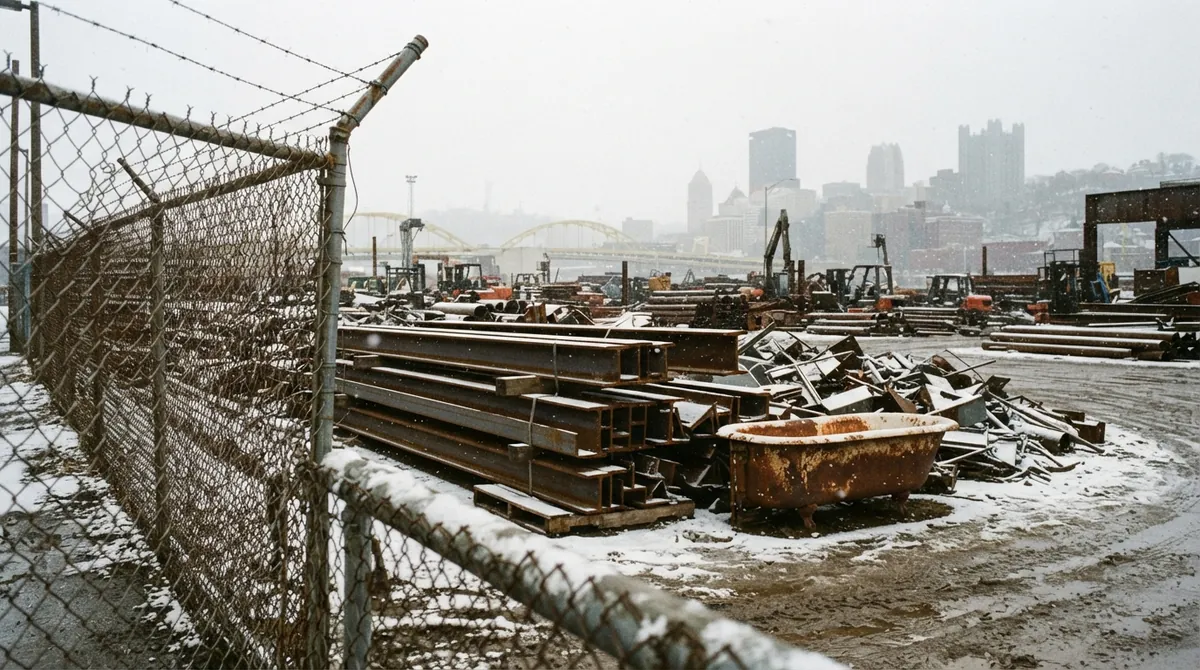
A winter in Pittsburgh has a way of turning fantasies into practical problems.
One minute you’re picturing snowball fights and the muffled crunch of fresh flakes. The next, you’re in a freezing basement trying to install gas lines with fingers that feel like someone else’s. You learn fast that “working utilities” is not a given, and that a house can be beautiful while also being a relentless logistics puzzle.
That was the backdrop for a small mystery: a cast-iron bathtub that vanished overnight from the back yard.
It felt random—like, who coordinates a theft for something that heavy? But the clue was already hiding in plain sight: Pittsburgh had scrappers. Where a West Coast “scrounger” might hunt for quirky objects, a scrapper hunts for raw metals. And once you understand how scrap gets identified, sorted, and priced, that missing bathtub starts to make sense.
Why that bathtub disappeared overnight
Cast-iron is a ferrous metal—meaning it contains iron. “Ferrous” matters because it has a simple physical behavior: most ferrous scrap is magnetic.
A scrapper doesn’t need to love bathtubs. They need weight, predictable material value, and a way to move the stuff into a vehicle quickly. A heavy cast-iron tub is basically a portable pile of iron.
Also, the world of scrap runs on speed and volume. The moment something valuable sits outside (even temporarily), it becomes an opportunity. A bathtub “left up against the house” isn’t a lost object; it’s inventory waiting to be categorized.
There’s an uncomfortable truth here: the economics of scrap don’t care that a bathtub was once part of a home. They care that it’s metal, and metal can be resold.
The real technical problem: identifying metal grade
Scrap yards don’t pay the same price for “steel” the way people imagine it. Instead, they pay for a grade—a category based on composition and cleanliness.
Two pieces of iron can end up worth very different amounts if one is clean and one is contaminated with other materials.
Contamination in scrap means unwanted inclusions that make processing harder or lower product quality—things like paint, insulation, rubber seals, mixed alloys, or even the wrong metal stuck to your “steel.”
That’s why a question like “How does a yard decide what to pay?” turns out to be less about vibes and more about repeatable identification steps.
The magnet test (the beginner-friendly sorting tool)
One of the simplest tools in scrap identification is the magnet test. The magnet test is exactly what it sounds like: touch a magnet to the metal and observe whether it attracts.
- If the magnet sticks, the metal is likely ferrous (contains iron).
- If it doesn’t, the metal is likely non-ferrous (metals like copper and aluminum are common examples).
For many scrap loads, this gets you 80–90% of the way to the right category.
The reason it works is straightforward: ferrous metals attract magnets due to their internal structure. It’s fast enough that sorting operations often start there before any other checks.
This approach is described plainly by scrap-education resources and scrap processors: magnet test first, then further identification by other cues when needed—like color, weight, and “weakly magnetic” exceptions for some stainless steel grades. (orangescrap.com)
When the magnet test isn’t enough
Some stainless steels are tricky because certain grades can be weakly magnetic or behave in a way that confuses a casual test. That’s not a deal-breaker, but it means the yard may verify with additional checks.
Professional sorting can also use handheld XRF analyzers.
- XRF stands for X-ray fluorescence.
- It’s a handheld device that estimates the metal’s elemental composition (what atoms are present) so the sorter can identify not just “ferrous vs non-ferrous,” but closer to the actual alloy category.
That matters because alloy identity can swing pricing dramatically, and the cost of mis-sorting is paid by the person who brought the load. (alloygeek.com)
How scrap gets priced: value is per pound, but logic is per category
Scrap pricing is often presented as a number like “cents per pound,” which is helpful, but incomplete.
Yards typically use a pricing table based on material type and grade, and they also adjust based on what they’re forced to do to process your load.
For a quick sense of scale, scrap-valuation calculators that track current averages show a big spread between metals. For example, one August 2026 snapshot of representative U.S. averages lists copper much higher per pound than stainless steel and shredded steel. (recyclefind.com)
That matches the intuition from the backyard bathtub story: steel/iron is lower value per pound than copper, but it’s also abundant, dense, and easy to bunch up into heavy loads.
Converting “cents per pound” into something intuitive
If you remember a scrapper saying “four cents a pound,” the easiest translation is:
- 0.04 dollars/pound × 2,000 pounds/ton = $80 per ton (approximately).
That’s low compared to copper, but it’s the kind of number that makes sense for commodity ferrous scrap.
Also: scrap prices move. National averages update frequently, and local yards set their own grading rules. Tools that aggregate data emphasize that the market shifts and that local pricing can differ from the headline average. ()
Why scrappers don’t treat houses like museums
In the story, the scrappers aren’t hunting for “cool vintage objects.” They’re hunting for feedstock.
Scrap operations use a pipeline:
- Receive a load (truck arrives with mixed items).
- Sort into material categories (magnet test, visual cues, sometimes lab-grade checks).
- Prepare it for melting or processing (separate, remove nonmetals, cut to size).
- Sell refined metal categories into downstream manufacturing.
From that perspective, keeping a bathtub outside for a while isn’t “storage.” It’s risk. It’s also time, and time is money.
The hidden engineering: moving heavy scrap without breaking yourself
The story’s stairwell chaos wasn’t just comedy. It highlighted how physical reality pushes scrap work into engineering-like problem solving.
Moving heavy metal objects is high-risk work because the combination of weight, sharp edges, and awkward leverage can turn a manageable task into a serious injury.
OSHA’s guidance on metal scrap recycling emphasizes hazards like cut and abrasion injuries from sharp pieces, noise exposure during breaking and size-reduction, flying object hazards when breaking scrap, and exposure to fumes or particulates depending on the processes used. (osha.gov)
Even when someone is “just carrying” scrap, the safety logic still applies: control the load, protect hands/eyes, and avoid situations where a piece can slip or crush a foot.
The tricky part for beginners is that scrap removal often happens during a home project—so the work gets treated like DIY labor. But scrap yards treat it like material handling, which is a different mindset.
Preparing scrap so you don’t get priced like the least valuable piece
If you want to think like a scrap sorter for a weekend project, the key idea is: reduce mixing.
When you bring in mixed loads, yards may grade conservatively. In plain terms, mixing tends to pull the price down because the yard must sort it anyway—and sorting costs money.
That’s why sorting early pays. Magnet test first for a quick ferrous/non-ferrous split, then further separate by what you can infer from appearance and knowledge of common materials. ()
Practical, non-gimmicky steps that align with how yards sort include:
- Drain and remove non-metal parts where feasible (rubber gaskets, insulation, hoses).
- Separate ferrous from non-ferrous.
- Keep known materials together when possible (clean, unpainted steel behaves differently than rusty or coated pieces).
- Cut large items into chunks only when you can do so safely.
This isn’t about making scrap look neat. It’s about reducing uncertainty for the grader—and uncertainty is expensive.
The punchline: “Scrap” is really about categorization
That vanished bathtub and the later furnace removal both point to the same technical truth.
Scrap isn’t a pile of random trash. It’s a flow of material categories driven by sorting methods, contamination risk, and market pricing per grade.
So when people laugh at the absurdity of stealing a bathtub, the more interesting answer is less funny and more practical: the tub is heavy, ferrous, and easy to categorize. In a scrap economy, that’s enough.
Conclusion
Winter turns a basement into an experiment. Metal turns that experiment into a lesson about systems: identification, sorting, contamination control, pricing rules, and the physical logistics of moving heavy stuff without getting hurt.
Once those parts click, “scrap” stops being a vague concept and becomes a technical process—one that starts with a simple question: what exactly is this piece of metal, and how will a yard pay for it today?
Comments (0)
No comments yet. Be the first to respond!
Leave a Comment
Your comment will be visible after review.