Shimano Bicycle Museum Review: A Machine-First Visit
 by ahsan
October 02, 2026
5 min read
by ahsan
October 02, 2026
5 min read
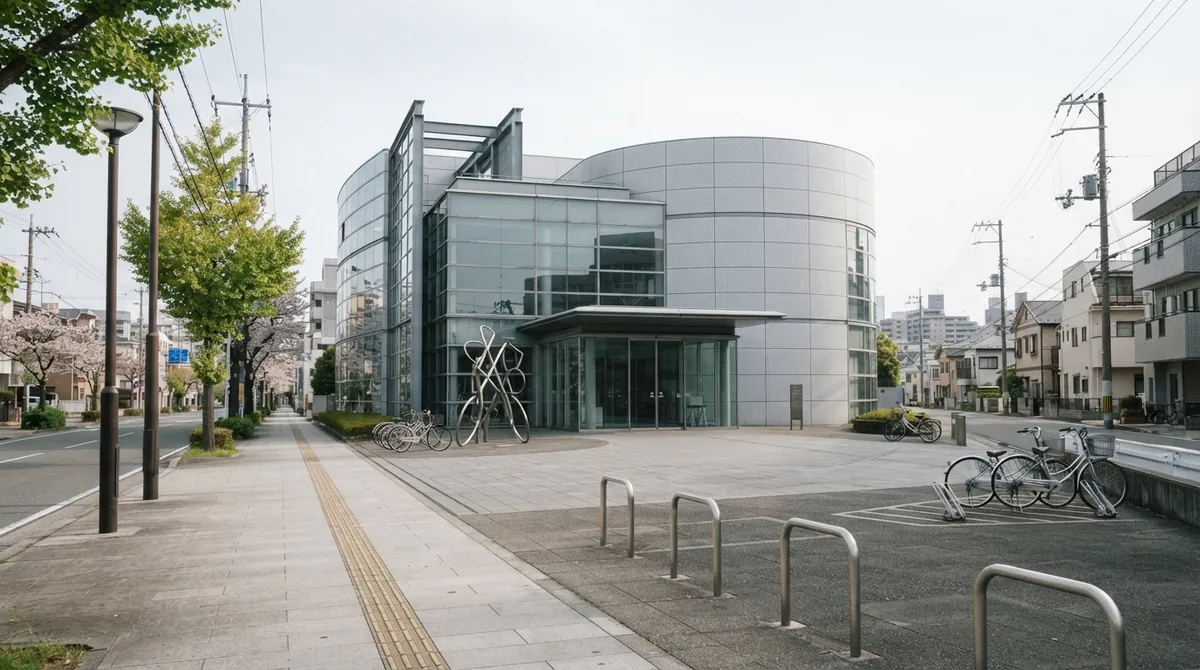
At first glance, the Shimano Bicycle Museum in Sakai, Osaka, looks like a corporate headquarters with a gallery attached. Glass and steel, polished lines, a quiet surrounding neighborhood. Then the entrance changes the story: this is not a shrine to Shimano components but a carefully staged history of the bicycle, from foot-powered experiments to race machines, cargo bikes, adaptive cycles—bikes modified for riders with different mobility needs—and the everyday machines that carry people to work.
The current museum grew out of Sakai’s older Bicycle Museum Cycle Center and reopened in March 2022 after a major expansion. Its guiding idea—bicycle origins, spread, and future—gives the visit a clear shape. You do not need to arrive as a Shimano expert; the building teaches you how to look. (bikemuse.jp)
The surprise is what the museum leaves out
A company museum often follows a familiar script: founder, milestones, famous products, polished timeline, gift shop. This one mostly refuses. Shimano components appear, but the museum rarely stops to congratulate itself. There is no hard sell and no product shop waiting at the exit.
The corporate thread appears in the story of Sakai manufacturing. Shimano began in 1921, and one of its first products was the bicycle freewheel. A freewheel is the toothed rear-wheel mechanism that lets the wheel continue turning when you stop pedaling. It is a small object, but it connects precision machining, rider comfort, and the larger evolution of the bicycle. (shimano.com)
Begin in the dark with two hundred years of tinkering
The historical gallery begins in a darkened room, where individual bicycles emerge under spotlights. The arrangement feels like a procession. Early machines look strange because each solves only part of the problem—balance, steering, propulsion, or speed.
The sequence moves from the Draisine, an early two-wheeled machine propelled by pushing your feet against the ground, through pedal bicycles, high-wheel designs, and finally the safety bicycle. A safety bicycle uses two wheels of similar size, pedals connected to the rear wheel through a chain, and a lower center of gravity than the tall high-wheel machines. That is the basic layout you recognize today.
A drivetrain—the group of parts that transfers your leg power to the driven wheel—can sound like a dry engineering term. Here it becomes a story: add pedals, guide force through a chain, improve tires, lower the rider, and the machine becomes safer and more useful.
The panorama theater places those changes beside industrialization, war, transport, sport, and consumer culture. Bicycles do not evolve in isolation; roads, factories, materials, and people’s free time shape what becomes practical.
Then the room turns bright
After the dark chronology, the next gallery feels like a reset: white walls, daylight through frosted glass, and bicycles raised on small platforms instead of sealed behind thick cases. That proximity is one of the museum’s strongest choices. You can lean in and study a frame joint, where cables run, or a worn component without needing a telephoto lens.
A steel Flandria associated with Freddy Maertens rewards that close inspection. The tubing decal, paint, and Shimano Crane rear derailleur—the mechanism that moves the chain between rear sprockets—make professional racing history feel physical rather than legendary.
The collection also refuses to treat racing as the whole story. An early Specialized Stumpjumper shows the improvised character of mountain bikes, while a Swedish postal bicycle wears studded tires for winter work. A loaded touring bike looks dusty and genuinely used; a road bike from the 2021 Tokyo Olympic race still shows scratches and crash damage. Kids’ and shopping bikes appear too. Almost everyone can recognize something they have ridden.
The best lessons are tactile
The museum’s best lessons are tactile. Tubes made from steel, aluminum, and titanium sit close enough to compare, and hands-on displays let you feel differences in mass. A bicycle frame is the structural skeleton that holds the wheels, rider, and steering parts together; its material affects weight, stiffness, durability, repair, and cost.
None is a magic answer. Steel can be repaired in many workshops and has a familiar, resilient feel. Aluminum can make a light, firm frame. Titanium resists corrosion and can last for decades, but it is demanding and expensive to work with. The point is not to crown a winner; it is to show that every bicycle is a set of compromises made visible.
Another display breaks a modern racing bicycle into its separate components—the individual working pieces that form the whole machine. The museum puts the count at roughly 3,200 once chain pins, bolts, bearings, wiring, and electronic parts are included. An assembled bike looks quiet and inevitable. Spread across a wall, it looks like a small mechanical civilization.
Sakai is part of the exhibit
The museum makes more sense once Sakai enters the story. The city developed deep metalworking skills through crafts such as swords, firearms, and cutlery. When imported bicycles arrived in Japan, local repairers and manufacturers could apply that knowledge to a new machine. (city.sakai.lg.jp)
Even the welcome message places the rider at the center. It explains jitensha, the Japanese word for bicycle, as “wheels rotated by oneself.” The phrase is a neat summary of the museum’s attitude: the company matters, but the person using the bicycle matters more.
The top floor extends that idea into research, with a corridor devoted to bicycle components, a specialist library, and a searchable digital archive. In 2026, the special-exhibition program includes a show on bicycles made with natural materials, scheduled through March 21, 2027. That changing layer gives the museum a longer life than a fixed timeline.
Practical details for a Kansai itinerary
The museum is about a five-minute walk from Sakaihigashi Station on the Nankai Koya Line, south of central Osaka. Current visitor information lists opening hours of 10:00 a.m. to 4:30 p.m., with last admission at 4:00 p.m.; it closes on Mondays, or Tuesdays when Monday is a public holiday. General admission is ¥500, with lower student pricing and free entry for preschoolers, elementary and junior-high students, people aged 65 or older, and eligible visitors with a disability certificate and attendant.
There is no dedicated car park, so public transport is the sensible choice, while bicycle parking is available. Displays and visitor information are available in English as well as Japanese. Allow at least an hour for the main route; the library and special exhibition reward a slower visit.
Verdict
Is the Shimano Bicycle Museum worth a detour from Osaka, or a planned stop on a longer Kansai trip? Yes—especially if you like design, engineering, transportation history, or the small clues that reveal how a machine was actually used.
The museum carries Shimano’s name, but its real subject is broader: the bicycle as invention, tool, sport, livelihood, and companion. You leave thinking less about a single brand and more about why two wheels, a chain, and a human body have remained such a powerful arrangement.
Comments (0)
No comments yet. Be the first to respond!
Leave a Comment
Your comment will be visible after review.