The $266 Lesson in AI-Assisted Tablet Rooting
 by ahsan
August 23, 2026
7 min read
by ahsan
August 23, 2026
7 min read
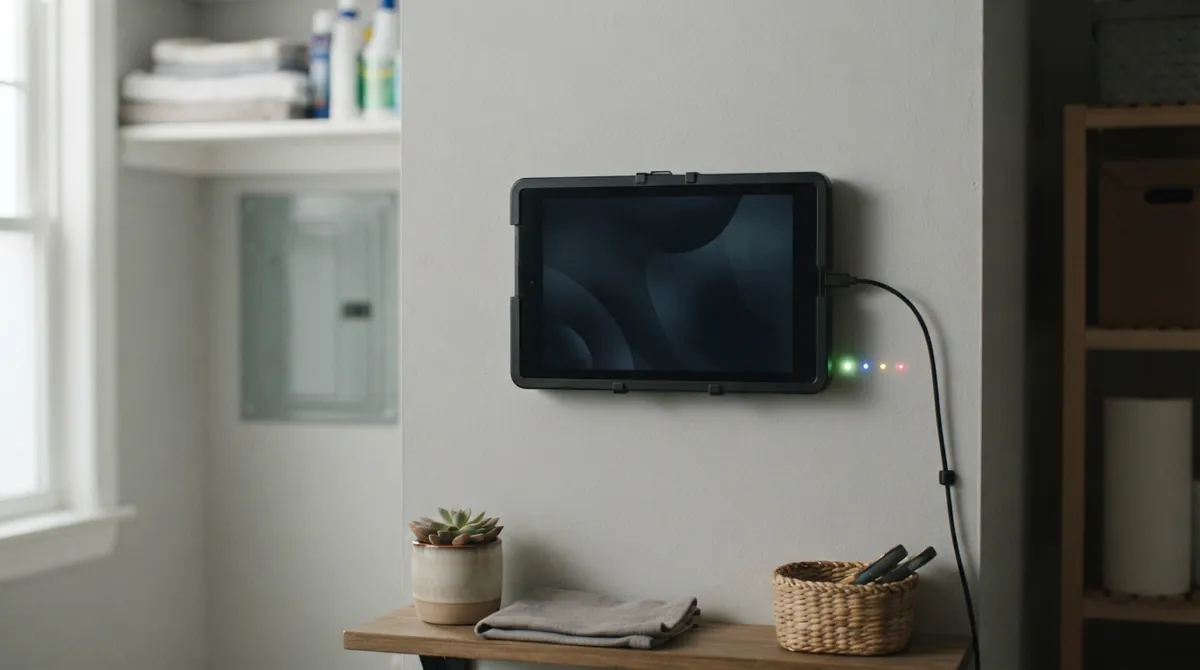
At 7:23 p.m., a tablet mounted on a wall went dark for the second time that day. It was meant to be a boring appliance: an Amazon Fire HD 10 running Fully Kiosk Browser, an app that keeps a device focused on one web page, with a Home Assistant smart-home dashboard glowing nearby. Instead, the tablet had started performing full shutdowns. Not sleep. Not a frozen screen. Power gone.
That annoyance became a $266.15 experiment in AI-assisted rooting. The tablet itself had cost $114.26. The strange part was not only the price. It was the route: one model searched for a viable path, another examined the failures, and a final model completed the work in a day. The result was less a magic trick than a long debugging session in which language models supplied patience and the hardware supplied the verdict.
The reboot was the first clue
The most valuable evidence arrived in a small line of system telemetry. Telemetry means a record produced by a device about its own behavior:
LifeCycleReason:LCR...key=Software_Shutdown
That line narrowed the mystery. A kiosk app might crash or lose its network connection, but a deliberate software shutdown points toward a privileged system component. Several Amazon services had permission to reboot or shut down the tablet. Disabling some of them helped for a while, until the operating system rejected attempts to touch protected packages.
The early investigation used Android Debug Bridge, usually called ADB. ADB is a command-line tool that lets a computer communicate with an Android device for tasks such as installing apps, collecting logs, and opening a device shell. A connection can be checked with:
adb devices
That command confirms communication; it does not grant root access. The distinction is easy to miss when you are new to Android security. ADB can put your hands on the machine, but the operating system still decides which doors those hands may open. (developer.android.com)
Root is a different kind of ownership
Root is the Unix and Android term for the superuser account, the identity with authority over nearly every part of the operating system. Owning a tablet physically does not automatically make you root logically. Manufacturers can restrict system packages, prevent changes to startup software, and require signed operating-system images.
The bootloader is the small program that runs before Android and decides what software is allowed to start. On a locked device, it normally verifies a cryptographic signature before accepting a new system image. That makes replacing the operating system difficult, even for the person holding the device.
The question underneath this whole story is: why can a cheap tablet be harder to root than an expensive phone? The answer is usually a combination of hardware-specific software, locked bootloaders, missing documentation, and a small community of researchers. The 2021, 11th-generation Fire HD 10 uses a MediaTek MT8183 system-on-chip and an Arm Mali-G72 MP3 graphics processor while running Fire OS 7 based on Android 9. That exact combination matters because a technique that works on a nearby Fire tablet may fail completely on this one. (developer.amazon.com)
The forgotten bug lived in the graphics driver
The breakthrough came from looking below the Amazon services. A CVE, or Common Vulnerabilities and Exposures identifier, is a standardized name for a publicly documented security flaw. CVE-2022-38181 describes a use-after-free vulnerability in an Arm Mali GPU kernel driver.
A use-after-free bug happens when software releases a block of memory but continues using an old reference to it. Picture a warehouse worker returning a numbered storage bin, then later using the same number without checking whether another worker has filled that bin with something else. If the timing is favorable, stale instructions can act on a new object.
This particular driver code ran in the kernel, the privileged core of the operating system that manages memory, processes, and hardware. The flaw could allow an unprivileged local process to access memory after it had been freed, creating a path toward higher privileges. The vulnerability received a high severity score in the National Vulnerability Database, and the Cybersecurity and Infrastructure Security Agency later placed it in its Known Exploited Vulnerabilities catalog. Arm documented a fix in driver version r40p0 in October 2022. (securitylab.github.com)
Finding a vulnerable component was not the same as having root. The tablet needed the right firmware, the right memory layout, and a reliable way to turn a fragile memory error into controlled execution. That is where the AI-assisted workflow became interesting.
The models worked best as a relay team
The first model did not discover the answer by repeating old forum posts. It extracted the kernel from the tablet’s exact over-the-air update image. An over-the-air update, often shortened to OTA, is the software package a manufacturer sends to a device through its update system. The model then compared the binary—the compiled machine code inside the kernel and driver—against known Mali fixes.
It also used disassembly, the process of translating machine code into a more readable instruction form, to reason about the driver’s behavior. From there, it assembled a research toolkit: a trigger for the bug, memory-layout checks, crash logging, and repeated tests. The exact exploit mechanics are less important here than the method. The model moved from “someone once rooted a related tablet” to “this is the code running on this tablet, and this is what it appears to do.”
The first session consumed roughly thirty hours and 621 messages. It cost $164.25. After the model ran out of budget, it produced a handoff document for a second model to audit. A useful handoff looked more like a lab notebook than a conversation:
firmware/
 kernel-image
 crash-logs/
 verified-facts.md
 HANDOFF.md
That division of labor mattered. One model explored possibilities; another challenged assumptions and found fatal bugs; a later model integrated the surviving pieces. The version numbers mattered less than the structure. A single fluent model can sound convincing while being wrong about one address, one timing assumption, or one missing cleanup step.
Why the tablet kept crashing
Use-after-free exploitation is often a timing problem. Freed memory does not disappear into a void. The kernel’s memory allocator quickly recycles it for another object. A slab cache, in this context, is a kernel-managed pool of similarly sized objects. The exploit succeeds only when the freed slot is reused in a useful way.
Most attempts therefore ended in a kernel panic, which is the operating system’s emergency stop when it detects unrecoverable corruption. The tablet rebooted, the harness tried again, and the cycle continued. More than 500 attempts were tested, with several retries during each boot.
This is the part that software demonstrations often hide. The model could explain why an attempt failed in polished paragraphs, but the tablet answered with a black screen and another restart. Hardware does not care how plausible the reasoning sounds. It cares whether the bytes line up at the right moment.
Guardrails saw a category, not the context
The experiment also exposed a different boundary. One model refused to summarize earlier work because the conversation still looked like cybersecurity exploitation, even though the device belonged to the person asking. Other models accepted the same ownership argument and continued.
That disagreement is not proof that one system has better ethics than another. Safety guardrails are policies and classifiers designed to block dangerous categories of requests. They do not possess a reliable title deed for the hardware on the other side of a chat window. A refusal can interrupt legitimate research, while an acceptance does not prove that a request is safe.
The responsible lesson is not that every model should provide kernel exploits. It is that authorization, technical risk, and educational value need more context than a single prompt can provide. Work of this kind belongs on personally owned hardware, isolated from important networks, with backups and a clear understanding that rooting can weaken update and security assumptions.
What the experiment really proved
- Exact firmware beats general knowledge. The exploitable condition existed because this particular tablet had an older software state.
- Independent review beats confidence. A second model was valuable because it disagreed, not because it generated more words.
- Logs beat storytelling. Shutdown records, crash data, and binary comparisons carried more weight than a confident explanation.
- Root is the beginning of maintenance. Once a device is modified below the normal app layer, updates, recovery, and future failures become the owner’s responsibility.
The lasting lesson is not that AI can root any tablet. It cannot. The lesson is that AI can compress tedious research when it is given exact artifacts, a repeatable test loop, and a human willing to treat every successful-sounding answer as a hypothesis until the hardware proves it.
Comments (0)
No comments yet. Be the first to respond!
Leave a Comment
Your comment will be visible after review.