The Social API Is Failing at Home
 by ahsan
September 29, 2026
6 min read
by ahsan
September 29, 2026
6 min read
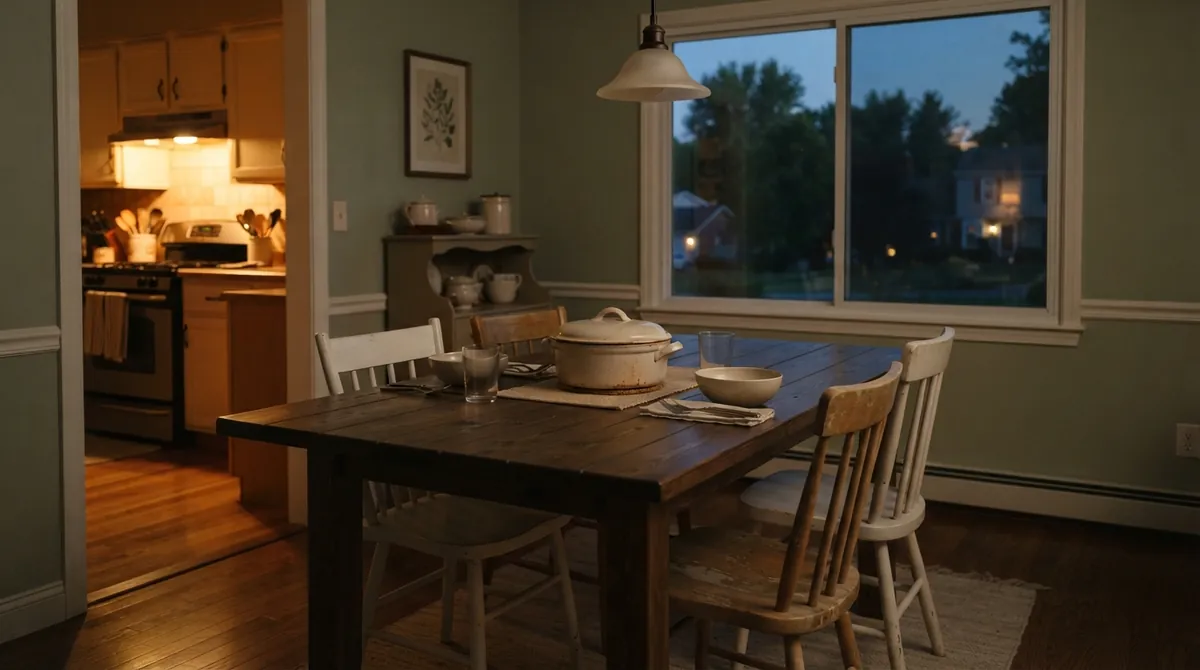
At 6:30 on a Saturday evening, the dining table is clean, the grocery bag is still in the hallway, and the group chat contains three versions of the same message: “We should do dinner soon.” Nobody is refusing the invitation. The dinner simply never becomes a date.
Borrow a term from software. An application programming interface, or API, is a set of rules that lets two systems connect. Social life has APIs too: familiar places, recurring habits, and low-pressure invitations that help people meet without rebuilding the entire plan from scratch. Hosting friends used to be one of those interfaces. Now it often feels like custom software.
Why does hosting friends feel like a major production now? The answer is less about people becoming colder and more about the systems around them becoming harder to coordinate.
The decline is bigger than dinner parties
The latest American Time Use Survey, released by the U.S. Bureau of Labor Statistics on June 25, 2026, found that 30 percent of people age 15 and older engaged in socializing and communicating on an average day in 2025, down from 38 percent in 2015. The average time spent on those activities fell from 41 minutes to 35 minutes. During the same period, playing games or using a computer for leisure rose from 25 minutes to 37 minutes. (bls.gov)
That survey does not count dinner parties directly. Its category is broader, which makes it a signal rather than a perfect measurement of hosting. Still, the direction matters: everyday social contact is taking up less of the day, while more leisure is moving toward activities that can happen alone.
A newer survey points to the same pressure from another angle. The Social Connection in America survey, released September 24, 2026, reported that nearly 70 percent of Americans get together with people they care about no more than once or twice a month. One in five do so only a few times a year or less. The biggest reported barrier was time, followed by distance, the effort required to arrange a gathering, and anxiety in social situations. (prnewswire.com)
None of this means people have stopped wanting friends. It means friendship increasingly has to compete with a large amount of friction.
Hosting is a coordination system
Hosting is not only cooking. It is an interface between a private household and a wider social network. Someone chooses a time, cleans a room, buys food, sends the invitation, absorbs the awkwardness of a cancellation, and handles the dishes afterward.
Economists might describe some of this as a fixed cost: effort that has to happen whether three people arrive or eight. The guests share the reward, but the host often carries most of the preparation. When friends live far apart, work irregular hours, have young children, or feel pressure to make the evening impressive, that fixed cost grows.
The result is a familiar failure mode. Everyone is willing to attend, but nobody wants to be the system administrator.
Remote work and home-centered leisure may add to this effect, although the available data do not prove that either one caused the decline. In 2025, 35 percent of employed people did some or all of their work at home on days they worked, according to the Bureau of Labor Statistics. That arrangement can bring welcome flexibility, but it also removes some of the accidental contact once supplied by offices, commutes, and nearby coworkers.
Delivery, streaming, and messaging reduce the need to leave home. They are excellent at removing inconvenience. They are not designed to create a shared occasion.
The missing layer is social infrastructure
A third place is a location outside home and work where people can spend time around others without arranging a formal event. A library, neighborhood coffee shop, park, barbershop, community center, or familiar restaurant can serve this role.
Third places perform hidden social work. They make repeated exposure possible, which means you see the same people often enough for recognition and trust to develop. They also allow what might be called a low-stakes interaction: a brief chat, a shared table, or a wave across the room that does not require emotional preparation.
That layer is thinning. A 2024 report from the Survey Center on American Life found that 54 percent of Americans regularly spent time at a local coffee shop, bar, restaurant, or park, compared with 67 percent in 2019. Among the people who still have such a place, visits remain common. The larger change is that many people no longer have a dependable social setting nearby. (americansurveycenter.org)
Once those places disappear, every meeting becomes a project. The casual “I’ll see you there” turns into a chain of messages about calendars, driving, parking, food, weather, and whether anyone has the energy to make the trip. Social connection becomes possible, but no longer automatic.
A useful mental model looks like this:
connection = routine × proximity × low_friction × repetition
This is not a scientific equation. It is a way to see why a single spectacular dinner cannot replace a weekly gathering spot. If any factor falls close to zero, the whole system becomes fragile. A friend may be nearby but never available. A beautiful home may exist, but hosting may require too much preparation. A lively coffee shop may be open, but it may be forty minutes away.
Make gatherings repeatable, not impressive
The most promising response is not a return to formal dinner parties with perfect menus and polished rooms. That model asks too much of one person. A healthier design favors small, recurring gatherings that can survive an ordinary week.
A repeatable social routine usually has a few properties:
- The time is predictable, such as the first Sunday afternoon of each month.
- The food is forgiving: soup, pizza, sandwiches, or a potluck rather than a performance.
- The work is shared instead of quietly assigned to one host.
- The location can rotate between homes and public places.
- The invitation includes people who may not be able to travel, cook, drink, or stay late.
That last point matters. Hosting cannot be the only answer to disconnection. The Centers for Disease Control and Prevention reported that 12 percent of U.S. adults in 2024 had difficulty participating in social activities because of a physical, mental, or emotional condition. A social system built only around private homes will leave some people out, even when the intention is generous. (cdc.gov)
Public libraries, parks, community centers, and accessible neighborhood spaces matter because they distribute the burden. They give people somewhere to meet without requiring one household to provide the room, food, and emotional labor every time. The Surgeon General’s social connection framework makes a similar point by treating local social infrastructure as part of community health rather than as a decorative extra. (hhs.gov)
The default is what disappeared
Long-running comparisons about hosting need care. A survey question about a monthly dinner party is not identical to a question about a casual movie night, a neighbor dropping by, or friends meeting at a park. The wording, sample, and social meaning can change across decades.
That caution does not erase the broader pattern. Separate measures now show less daily socializing, fewer routine gathering places, and more people meeting friends only occasionally. The strongest conclusion is not that one exact American ritual died on one particular date. It is that repeated face-to-face contact has become more expensive to arrange.
The good news is that social systems do not need to be grand to work. A regular table with paper plates, a library room reserved every other Thursday, or a walk that happens whether the weather is perfect can restore the missing defaults. Friendship rarely disappears in one dramatic event. More often, the invitations become vague, the places close, and the routines stop repeating.
The social API can be rebuilt. It starts when connection becomes ordinary again.
Comments (0)
No comments yet. Be the first to respond!
Leave a Comment
Your comment will be visible after review.