What It Really Takes to Replace Petroleum With Plant-Based Materials
 by ahsan
October 05, 2026
5 min read
by ahsan
October 05, 2026
5 min read
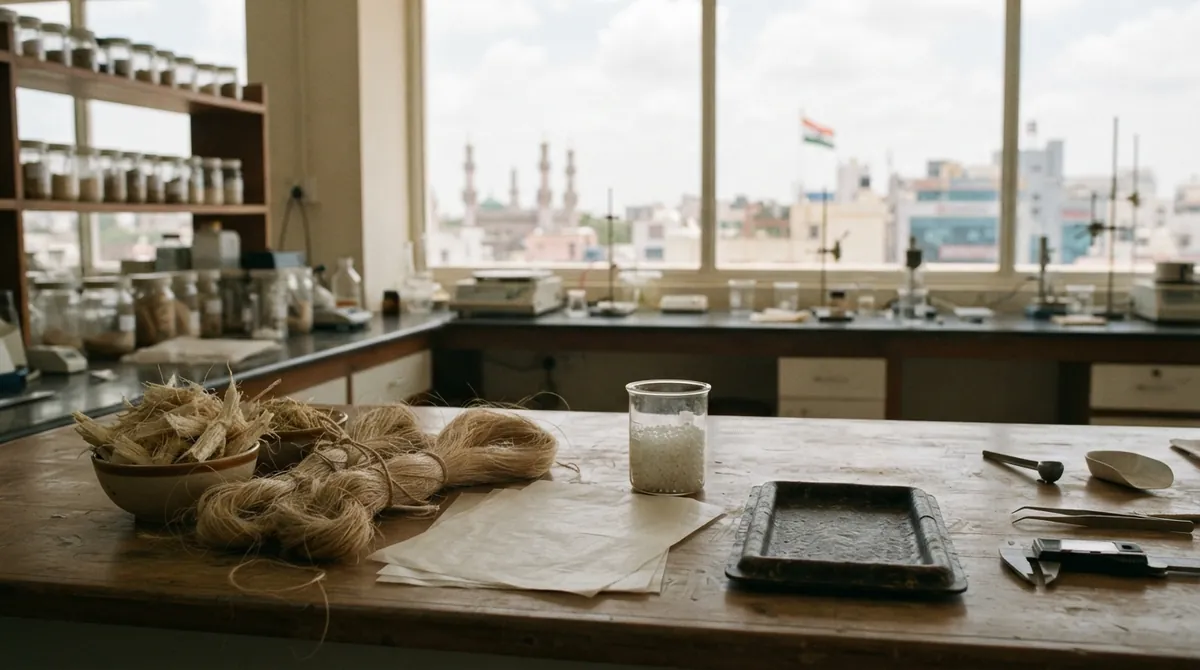
Walk through a supermarket and pick up three ordinary items: a clear bottle, a foam tray, and a glossy carton coating. They may look unrelated, yet many began with the same raw material: petroleum. Replacing petroleum-based products with plant-based materials sounds like a matter of swapping oil for corn or wood. The real work starts after the harvest. Engineers must turn variable biological matter into materials with predictable strength, shelf life, price, and end-of-life options.
That transition is real, but it is still early. A March 2026 briefing from the European Commission’s Joint Research Centre estimated that bio-based and biodegradable plastics represented about 0.5% of global plastics production as of 2025, with roughly 2.3 million tonnes of production capacity. The bottleneck is no longer whether plants contain useful chemistry; it is whether that chemistry can scale without shifting the damage to land, water, energy, or waste systems. (joint-research-centre.ec.europa.eu)
Plant-based is not the same as biodegradable
Bio-based describes where a material’s carbon comes from. It means all or part of the product is made from biomass, meaning recently living material such as crops, wood, algae, microbes, or agricultural residues. The label says something about the feedstock, not what happens after the product is thrown away.
Biodegradable describes a material’s behavior: microorganisms can break it down under specified environmental conditions and over a specified time. Compostable is narrower. It usually means the product is designed to break down in a managed composting process, often an industrial facility. Some bio-based plastics are not biodegradable, while some biodegradable plastics are made from fossil feedstocks. So what is the difference between bio-based, biodegradable, and compostable plastics? The answer is source versus end-of-life behavior, not a color or marketing slogan. (environment.ec.europa.eu)
The real factory is a biorefinery
Biomass is not a bag of ready-made plastic. Wood, straw, and sugarcane residue contain cellulose, hemicellulose, and lignin: intertwined plant polymers that provide structure. A biorefinery is a processing plant that separates those ingredients and converts them into fuels, chemicals, fibers, and materials, much as an oil refinery separates crude oil into different products. (nrel.gov)
plant or residue -> pretreatment -> sugars, fibers, oils, lignin
 -> fermentation or chemical conversion
 -> monomers -> polymers -> product
 -> reuse, recycling, composting, or energy recovery
A monomer is a small chemical building block; a polymer is a long chain made by linking many building blocks together. In one route, sugars are fermented, meaning microorganisms convert them, into lactic acid, which can be used to make polylactic acid (PLA). In another, microorganisms produce polyhydroxyalkanoates (PHAs) inside their cells. Plant oils, cellulose, and lignin can also feed resins, coatings, foams, adhesives, and other chemicals. The replacement may be a new chemical ingredient, not a finished object that looks like a leaf. (publications.jrc.ec.europa.eu)
Four practical routes away from petroleum
Drop-in plastics are chemically the same as familiar fossil-based plastics but start with biological feedstocks. Bio-based polyethylene (bio-PE) and bio-based polyethylene terephthalate (bio-PET), for example, can generally use existing manufacturing and recycling routes. They reduce dependence on fossil carbon, but they do not become compostable merely because a plant was involved. (eea.europa.eu)
Dedicated bio-based polymers are designed around new chemistry. PLA can serve packaging and fibers, while PHA materials can offer biodegradability in suitable systems. Their properties may be useful, but heat resistance, toughness, moisture sensitivity, and processing windows still need careful engineering.
Natural-fiber composites combine a polymer matrix, the material that surrounds and holds everything together, with reinforcement such as flax, hemp, jute, wood fiber, or bagasse. Think of the fibers as tiny strands of rebar inside concrete: they can add stiffness while reducing weight. The awkward part is the interface. Plant fibers readily absorb water, while many plastics repel it, so engineers must improve the bond between the two materials. (research.fs.usda.gov)
Bio-based chemicals widen the picture beyond plastic packaging. Plant oils can contribute to coatings and flexible foams; cellulose can become films or gels; lignin can be upgraded into aromatic chemicals. This is where the connection to green energy becomes practical. A biorefinery can turn one feedstock into several products, helping reduce waste and spread processing costs across the operation. (energy.gov)
Why the swap is harder than the label
Petroleum refineries receive a relatively uniform, energy-dense feedstock. Biomass changes with crop variety, weather, soil, moisture, storage, and harvest season. That variation affects color, purity, fiber length, and chemical yield. A factory must control those differences before it can promise the same bottle cap or car panel every time.
Cost remains a serious barrier. The 2026 Joint Research Centre assessment says bio-based plastics can currently cost about 1.5 to 2 times as much as fossil-based alternatives, depending on the route and product. Performance creates another trade-off: a material may have a lower climate footprint yet fail as a moisture barrier, soften at the wrong temperature, or require additives that complicate recycling. End-of-life can also become a trap. Sending compostable plastic into a conventional recycling stream can contaminate otherwise valuable material, while a compostable item has little environmental advantage if no collection and treatment system exists. (joint-research-centre.ec.europa.eu)
Measure the whole journey
The right comparison is a life-cycle assessment (LCA), a method for estimating impacts from raw-material production through manufacturing, use, and disposal. A useful mental model is:
total impact = feedstock + conversion + transport + use + end of life
Plants absorb carbon dioxide while they grow, but that does not make every plant-based product carbon neutral. Farming equipment, fertilizer, irrigation, land-use change, factory energy, transport, and disposal all matter. The Intergovernmental Panel on Climate Change has emphasized that bioenergy’s climate result depends on the biomass source, conversion pathway, energy inputs, land-use changes, time horizon, and system boundary. Residues and organic wastes may avoid some competition with food crops, but they are dispersed and can be costly to collect. A crop grown on newly cleared land is a very different proposition from a residue gathered near an existing processing site. (ipcc.ch)
That leads to a practical design rule: reduce material use first, extend product life, favor waste and by-products where they genuinely exist, and choose the end-of-life route before choosing the polymer. Use a drop-in material when a mature recycling system is the best fit. Choose compostability for specific, hard-to-recycle applications only when collection and industrial treatment are available. Measure and disclose the actual bio-based content rather than relying on a broad green label. (environment.ec.europa.eu)
The future is a portfolio, not a single substitute
Petroleum will not disappear from every product in one leap. The better goal is to reserve fossil feedstocks for fewer uses, replace them with recycled or renewable carbon where the chemistry fits, and design materials that stay useful for longer. Sometimes the winning solution will be a PLA cup; sometimes it will be a long-lived natural-fiber panel, a bio-based coating, or a product made smaller so no replacement is needed.
Plant-based materials matter because they give engineers another carbon source and another way to connect agriculture, manufacturing, energy, and waste. Their promise becomes real only when the entire chain, from feedstock to factory to disposal, works as one system.
Comments (0)
No comments yet. Be the first to respond!
Leave a Comment
Your comment will be visible after review.