When a Camera Has to Prove What It Saw
 by ahsan
September 16, 2026
5 min read
by ahsan
September 16, 2026
5 min read
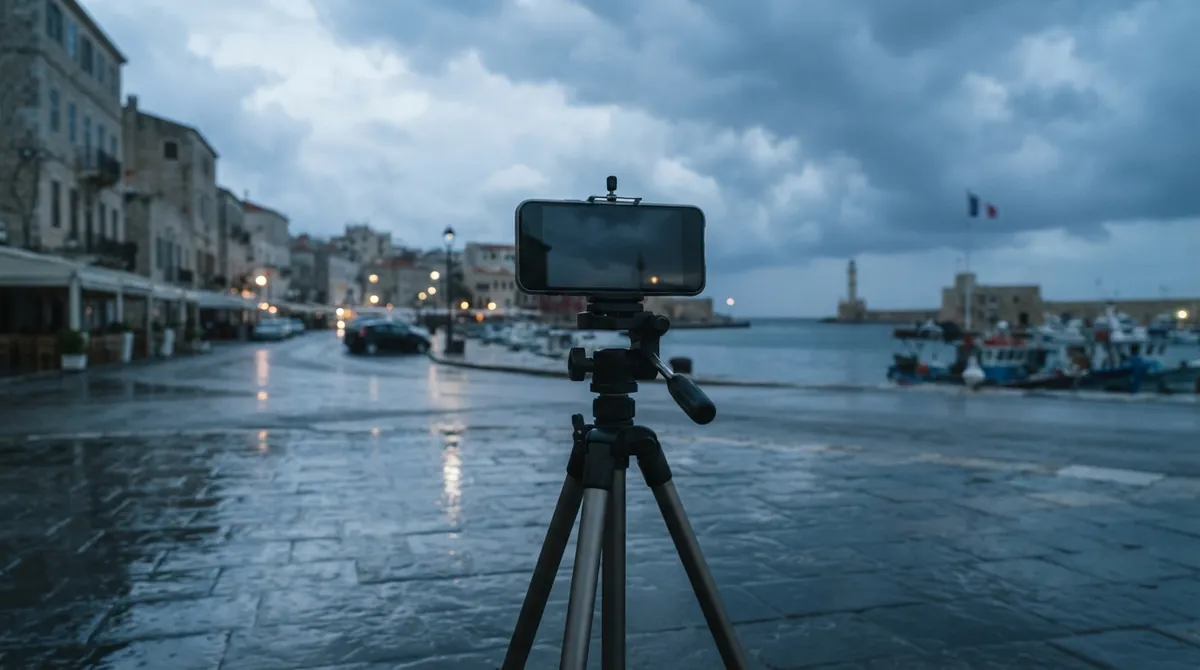
Picture a storm-damage photo arriving in a newsroom. The file shows bent street signs, soaked pavement, and a dark line of water at the curb. A few years ago, its natural appearance would have been a useful first clue. Now widely available artificial intelligence tools can remove a distracting object, alter a scene, or generate one from scratch, so visual realism no longer carries much proof.
Apple Reference Image, announced for iPhone 18 Pro and iPhone 18 Pro Max in September 2026, takes a different route. It is an opt-in mode for the Main camera that creates a signed reference image, not a claim that every ordinary photo is untouched. The useful question is: how can a phone prove that a picture came from its sensor without publicly identifying the person who held it?
A camera image is a processed result
Modern phone photography is not a direct dump of sensor measurements. The sensor records light as electrical data, then computational photography, meaning software that turns those measurements into a finished picture, applies operations such as demosaicing, tone mapping, and compression. Demosaicing reconstructs full color from the tiny color-filter pattern over the sensor. Tone mapping adjusts brightness and contrast, while compression reduces the size of the final file. Metadata, meaning descriptive information such as lens, exposure, and capture settings, travels alongside the pixels.
A cryptographic signature is a mathematical seal made with a private key and checked with a matching public key. Many provenance systems, including workflows based on C2PA, the Coalition for Content Provenance and Authenticity, attach a signed record of origin and edits to an image. That can make later changes visible, but it does not automatically prove that the pixels entering the signing step faithfully came from a camera sensor. Apple calls the stronger goal semantic authenticity: the viewable image should still mean what the sensor captured.
Start with a secure digital negative
Think of the secure digital negative as a modern version of film negative. It is not the finished picture a person scrolls through; it is a protected package containing the ingredients needed to develop that picture later.
When the user switches to Reference mode, the sensor boots into a specialized capture state. It signs pixel data inside the sensor immediately after capture and prevents sensor firmware, the low-level software that controls the hardware, from rewriting the data first. Sensor-created metadata is signed alongside the pixels. Values that come from elsewhere in the camera system, such as focal length or digital zoom boundaries, are signed by the Secure Enclave Processor, a separate hardware security component that protects keys and device-originated assertions.
signed pixels
+ signed sensor metadata
+ secure capture-time bounds
+ device integrity records
= secure digital negative
This split closes two different gaps. Signing only raw data would leave the difficult development process unprotected; signing only the finished photo could allow a compromised operating system to alter the image before the signature is made. Apple protects the capture first, then protects the development.
The cloud step is part of the proof
The secure negative still needs to become a viewable photograph. That work happens in Private Cloud Compute, or PCC, Apple’s privacy-preserving cloud environment for computation that may be too demanding for a device. PCC performs operations such as demosaicing, tone mapping, and compression while checking the sensor signature, the device relationship, and the signed metadata.
PCC is designed around attestation, which is cryptographic proof of the hardware and software state running on a server. Production builds are recorded in an append-only transparency log, meaning entries can be added and audited but not silently rewritten. The iPhone is designed to send the image data only to a node whose measured software matches an approved build. The result is a useful combination: cloud-scale processing without handing the development step to an ordinary, opaque server.
A time window beats a changeable clock
A timestamp in the phone’s settings is not strong evidence. An operating system clock can be changed, and a time printed into metadata can be changed with it. Apple Reference Image instead uses a cryptographic timestamp service, which returns signed proof of time, to create a lower and upper bound around the capture.
The device keeps a recent timestamp token, refreshed through a network heartbeat that averages about every 15 minutes worldwide. After the photo is taken, it obtains another token. If the first token represents 10:00 and the second arrives at 10:12, the system can establish that the photo was captured between those two moments. That is not millisecond precision, but it is a verifiable time window rather than an editable clock reading.
What happens when trust fails?
The signature on the final reference image is designed to remain useful for a long time. Apple combines RSA-3072 with ML-DSA-87 in a composite post-quantum signature. Post-quantum cryptography refers to algorithms designed to resist attacks from future quantum computers, which could threaten some widely used public-key systems.
There is also a recovery plan for the possibility that a protection fails. During development, PCC checks whether the data has the physical characteristics expected from the supported sensor. Apple can revoke one photo or an entire sensor. Revocation means invalidating an issued credential after a problem is discovered. Devices refresh revocation lists before treating a reference image as valid, so authenticity is not a forever stamp that can never be withdrawn.
Strong claims without a public identity
The privacy design is as important as the signature. The final image is signed by Apple’s service after PCC validates it, rather than by a public credential that identifies a photographer or permanently links a set of images to one device. An outside viewer should not be able to tell whether two reference images came from the same sensor.
The image pixels are processed inside PCC under a design intended to keep them inaccessible even to Apple. That matters for photographers working in sensitive places, but it also changes the shape of ordinary trust: the system makes a strong claim about capture without demanding a public name in return.
What viewers actually get
For viewers, the experience is deliberately more familiar than the cryptography behind it. Apple says the Photos app can show a reference image beside the regular photo, much like a digital negative, so a person can compare the two and spot edits to the ordinary copy. APIs, or application programming interfaces, in iOS, iPadOS, and macOS 27 allow third-party apps to build their own viewing and verification tools.
A reference image still cannot prove that a scene was not staged, that the caption is accurate, or that the photographer included the whole context. It proves something narrower and more useful: the image came through a protected sensor-to-reference pipeline, within a checkable time window, and has not been revoked.
That shift, from appearance to provenance, is the real idea behind Apple Reference Image. In an era when a convincing picture can be generated in seconds, trustworthy photography may depend less on whether an image looks real and more on whether its capture story can survive technical inspection.
Comments (0)
No comments yet. Be the first to respond!
Leave a Comment
Your comment will be visible after review.