When Fans Have to Restore the Restorers
 by ahsan
September 28, 2026
6 min read
by ahsan
September 28, 2026
6 min read
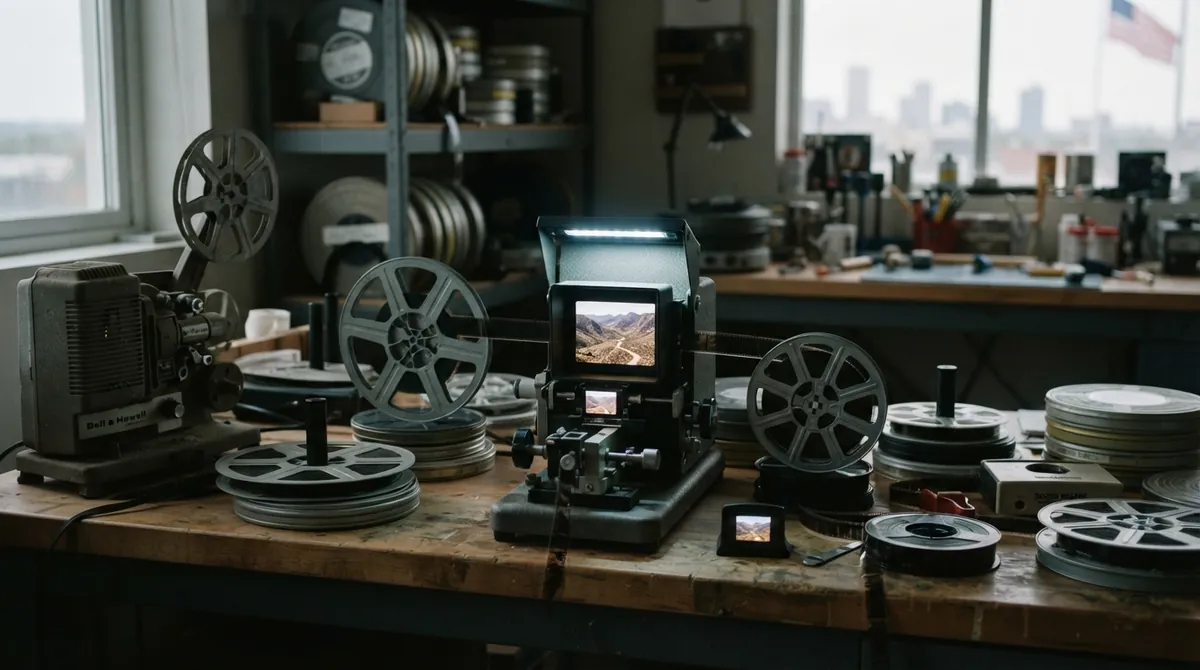
Imagine settling in for a favorite western and hearing a gunshot that sounds as if it was recorded last Tuesday. The picture is scrubbed smooth, the frame is cropped, and a scene you remember suddenly lasts ten minutes longer. The movie has not changed in your memory. The release has.
That is the strange problem behind fan-made film reconstructions and home-video restoration. Collectors compare DVDs, Blu-rays—high-definition optical discs—old LaserDiscs (an older optical home-video format), broadcast recordings, and scans of film prints, looking for the version that preserves an earlier edit, soundtrack, or color. Why does one classic need three different discs before it feels whole? Because a movie is not one file. It is a chain of decisions, copies, and compromises.
A film can have several originals
“Original version” sounds singular, but films often have several historically meaningful forms. A studio may prepare one cut for Italy, another for the United States, and a longer version for a later reissue. Censors may remove a scene. A director may revise the color or soundtrack decades later. A home-video department may add footage from a foreign negative because it is available, then present the result as definitive.
Sergio Leone’s The Good, the Bad and the Ugly makes the problem vivid. Its international release, Italian versions, later extended editions, and different soundtrack materials do not line up like copies of the same document. They are closer to related editions of a book, each preserving some details and losing others.
That distinction changes the goal. A preservation project is not always trying to manufacture the one true film. It may be trying to preserve a particular release: the version audiences saw in 1967, the version exported to another country, or the version represented by a surviving print.
Restoration is not the same as improvement
A restoration should be evidence-led. That means keeping the original framing, timing, and sound character unless there is a documented reason to change them.
The framing is described by the aspect ratio, the relationship between an image’s width and height. Crop a widescreen frame to fit a different television shape and you can remove a face, a gun barrel, or the empty space Leone composed around a character. The soundtrack has a similar history. Mono means the audio is carried as one channel; surround uses several channels to place sound around the listener. Turning an old mono track into a modern surround mix can make it louder and wider while moving it farther from the form audiences originally heard.
Digital cleanup creates another temptation. Grain is the fine texture of photographic film. Dust and scratches are physical defects. Noise reduction can remove defects, but pushed too far it can also erase hair, fabric, smoke, and the grain that tells you an image came from film. Color grading, the process of adjusting an image’s color and brightness, can restore faded timing or impose a sleek new look. Those are not interchangeable acts.
Professional archives often draw a useful line between preservation files and viewing copies. A preservation file aims to capture the source with minimal alteration. A distribution file can receive dust removal, scene-by-scene color correction, and audio adjustments so it plays well for an audience. Keeping both matters. Without the untouched reference, later restorers cannot tell whether a strange mark is damage or part of the original image. (archives.gov)
The archive becomes a puzzle
The best source for the picture may not be the best source for the sound. A new scan can reveal detail but use a revised edit. An old disc may have soft video yet preserve an unaltered mono track. A film print may carry the right color timing while showing splices, missing frames, or wear.
A reconstruction brings these witnesses together. The difficult part is synchronization, lining up picture and sound so that movement and dialogue agree. If two sources run at slightly different speeds, the error accumulates. That gradual separation is called drift. A few frames can be enough to make a cut feel wrong; several seconds can turn a conversation into accidental dubbing.
Before touching an edit, it helps to inspect what each authorized file actually contains. FFmpeg is an open-source collection of multimedia tools, and FFprobe is its text-based inspection utility. It can report a file’s duration, image size, frame rate, audio channels, and sample rate:
ffprobe -v error -show_entries format=duration:stream=index,codec_type,codec_name,channels,sample_rate,width,height,r_frame_rate -of default=noprint_wrappers=1 authorized_copy.mkv
This command does not decide which version is correct. It gives you a map. A file with a longer duration may contain an extended scene, or it may have different end credits. Two tracks with the same running time may still differ in channel layout or speed. Metadata, the technical labels stored with a file, narrows the search; frame-by-frame viewing and historical documentation do the real detective work. (ffmpeg.org)
At professional archives, film scans may be stored as DPX, or Digital Picture Exchange, an image sequence in which each frame exists as a high-quality file. A theatrical distribution package, often called a DCP, is a separate set of files prepared for cinema playback. The names sound intimidating, but the principle is familiar: preserve a high-quality source, then create carefully documented copies for particular uses. (archives.gov)
The ethical knot
Fan restoration sits in an uncomfortable place. A rights holder—the person or company controlling a film’s copyright—may no longer sell a particular version, but copying and distributing copyrighted material can still violate law and undermine the people who made or maintain it. “Pirating the pirates” is a satisfying slogan when a studio has overwritten its own history. It is not a blanket permission slip.
The healthiest outcome is version transparency. Rights holders and boutique labels can identify their sources, preserve original sound and framing, and include revised cuts as revisions rather than quietly replacing the historical one. In 2025, Arrow’s 4K edition—a high-resolution home-video release—presented both the international and extended cuts of The Good, the Bad and the Ugly, with original mono tracks alongside optional remixes. That choice treats disagreement between versions as useful information instead of an inconvenience. (arrowfilms.com)
A responsible fan project follows the same spirit, even when it cannot follow the same legal path. Define the target version. Record where each element came from. Keep the source files untouched. Mark every change. Never present a personal reconstruction as if it were an official historical fact.
Preservation means keeping the argument visible
The deeper lesson is that film preservation is not the search for a glossy, final answer. It is the preservation of evidence: the image, the soundtrack, the edit, the release history, and the reasons one copy differs from another.
A movie survives more honestly when viewers can see those choices. The rough mono track may be historically important. The extra scene may belong to one market but not another. A later director-approved grade may deserve to exist alongside the earlier theatrical look. No single version has to erase the rest.
Sometimes the people guarding cinema’s memory are studios, archives, and laboratories. Sometimes they are two exhausted editors comparing a battered disc with a newer scan. The work becomes meaningful when it stops asking which copy looks newest and starts asking which history might disappear if nobody keeps it.
Comments (0)
No comments yet. Be the first to respond!
Leave a Comment
Your comment will be visible after review.