Why AI Image Generators Invent Artists’ Signatures
 by ahsan
October 06, 2026
5 min read
by ahsan
October 06, 2026
5 min read
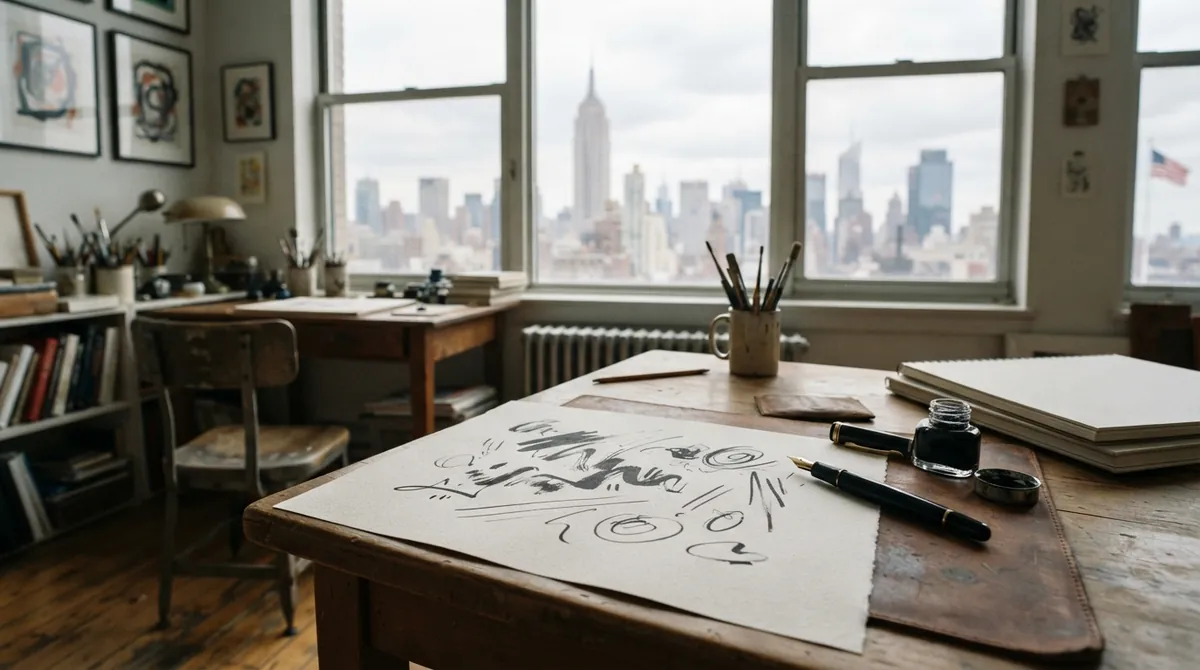
At first glance, a black-and-white, single-panel cartoon can feel too small to trigger a serious technology story. Then you notice the mark in the lower-right corner: a real cartoonist’s pen name. The cartoon was not drawn by that person, yet the image presents the signature as if it were a receipt from the artist.
A Nieman Lab report published October 5, 2026 documented this problem in ChatGPT-generated cartoons that resembled the house style of The New Yorker and sometimes carried signatures associated with real contributors, including Brendan Loper and Emily Flake. The important failure is not only that a model imitated a visual tradition. It also manufactured a claim about authorship. (niemanlab.org)
Why would an image generator invent a cartoonist’s signature when nobody asked for one? The answer sits in the gap between visual resemblance and human meaning.
A signature is a claim about identity
A signature is an attribution mark: a visual statement saying who made a work. In a feed where images are copied, cropped, and reposted, it also acts as provenance, meaning evidence about an image’s origin. Remove the caption or context from a cartoon and the signature may be the only clue connecting it to a real person.
That makes a fake signature different from a drawing that merely shares loose stylistic traits with an artist. A style resemblance may be unsettling or commercially damaging, but a signature tells the viewer, “This came from me.” The system has crossed from visual imitation into false attribution, even if nobody deliberately typed the artist’s name into the prompt.
How an image model learns the wrong mark
Image generators do not begin with a blank canvas and an understanding of authorship. Many use a process called diffusion: they start with visual noise and repeatedly predict which changes would make the result better match the prompt. During training, the model absorbs relationships among subjects, compositions, line patterns, captions, logos, and signatures.
It does not store those relationships like a neat folder labeled cartoonist = signature. Instead, it builds a latent representation, an internal numerical map of recurring visual patterns. If many online images show sparse cartoon panels, a particular kind of linework, and the same pen name in the corner, those details can become connected in that map.
Then a prompt such as “a dry, single-panel magazine cartoon” may activate the neighborhood containing all of those features. The model is not making a conscious decision to impersonate an artist. It is predicting a plausible-looking continuation of the image. That distinction explains the mechanism, but it does not erase the result: a viewer still sees a real name attached to work that person did not make.
Why a guardrail can miss a tiny signature
A guardrail is a rule or detection layer placed around a model to block risky requests or outputs. Modern image systems may check the prompt before generation, inspect the requested or uploaded images, and scan the final result. Those layers are useful, but they are not the same as an editor checking every mark for accurate credit.
The prompt may contain no artist’s name at all. The image checker may recognize the broad request as a generic cartoon while missing a small, warped signature. Optical character recognition, or OCR, converts pixels into text, but handwritten pen names are difficult to read when they are tiny, stylized, or partly merged with the drawing. OpenAI’s current documentation also makes clear that ChatGPT Images can add text and edit specific parts of an image, which increases the importance of checking text-like details in the final output. (help.openai.com)
This creates an awkward gap: a system can warn that a prompt may resemble third-party content and still produce an image containing a person’s name. The prompt policy and the image behavior are related, but they are not one perfectly synchronized system.
Style and attribution are separate problems
It helps to keep two questions apart.
First: does the picture resemble a recognizable artistic style? Second: does it claim to have been made by a particular person or publication? The second question is more specific and often more harmful. A generated cartoon can blend visual cues from several artists, yet a single familiar signature makes the mixture look officially endorsed.
The legal questions are separate too. A dispute over a general style, a copied cartoon, a logo, and a misleading attribution may involve different rules and evidence. A signature does not automatically decide a case, but it changes what the image communicates. It turns “this looks like that tradition” into “this person stands behind this work.”
Treat attribution as safety data
A safer prompt avoids named artists, magazines, logos, and signatures while describing the visual qualities needed for the project:
Create an original, single-panel black-and-white editorial cartoon
with clean linework, a sparse setting, and a dry caption.
Use a generic, ownable illustration style.
Do not imitate any named artist, publication, logo, or signature.
Do not add a creator name; leave the lower-right corner blank.
This is not a guarantee. Image models can still invent text. But it removes several cues that encourage the system to recreate a known visual package. OpenAI’s own image-generation guidance recommends asking for generic or ownable designs instead of imitating a specific brand, product, or artwork. (openai.com)
The stronger fix belongs inside the product. A generation pipeline could screen artist names and pen-name variants, inspect the output with OCR, compare suspicious marks against a protected signature database, and regenerate when the match is too close. None of those steps is perfect. Cartoonists change signatures, old scans are inconsistent, and an aggressive filter could block harmless initials. Still, treating attribution as a detectable safety signal is better than treating it as decoration.
Provenance helps after the image escapes
The other defense is provenance technology. Content Credentials, often called C2PA metadata, attach information about a file’s origin and editing history. SynthID adds an invisible watermark embedded in the image itself. OpenAI says supported images generated with its tools include both signals, while also warning that metadata can disappear through screenshots, conversions, or other file changes; embedded watermarks may survive some transformations but are not indestructible. (help.openai.com)
These tools answer an important question: which tool likely produced this file? They do not answer whether the named cartoonist approved it. A provenance check should therefore sit beside, not replace, attribution review.
When a suspicious image appears, preserve the original file and prompt if available, inspect its provenance information, compare the signature with the artist’s verified portfolio, and avoid reposting it as authentic work. If the image is already circulating, a clear correction is more useful than another unmarked copy.
A tiny signature can expose a large design mistake. Generative image systems are getting better at drawing text, linework, and familiar visual conventions—but authorship is not another texture to sample. The safest systems will treat names, signatures, and logos as identity-bearing data, then make that distinction visible before an invented mark travels farther than the truth.
Comments (0)
No comments yet. Be the first to respond!
Leave a Comment
Your comment will be visible after review.