Why eBay’s Radio Rules Still Allow Ham-Only Gear
 by ahsan
October 16, 2026
5 min read
by ahsan
October 16, 2026
5 min read
A radio listing can now trigger a paperwork question
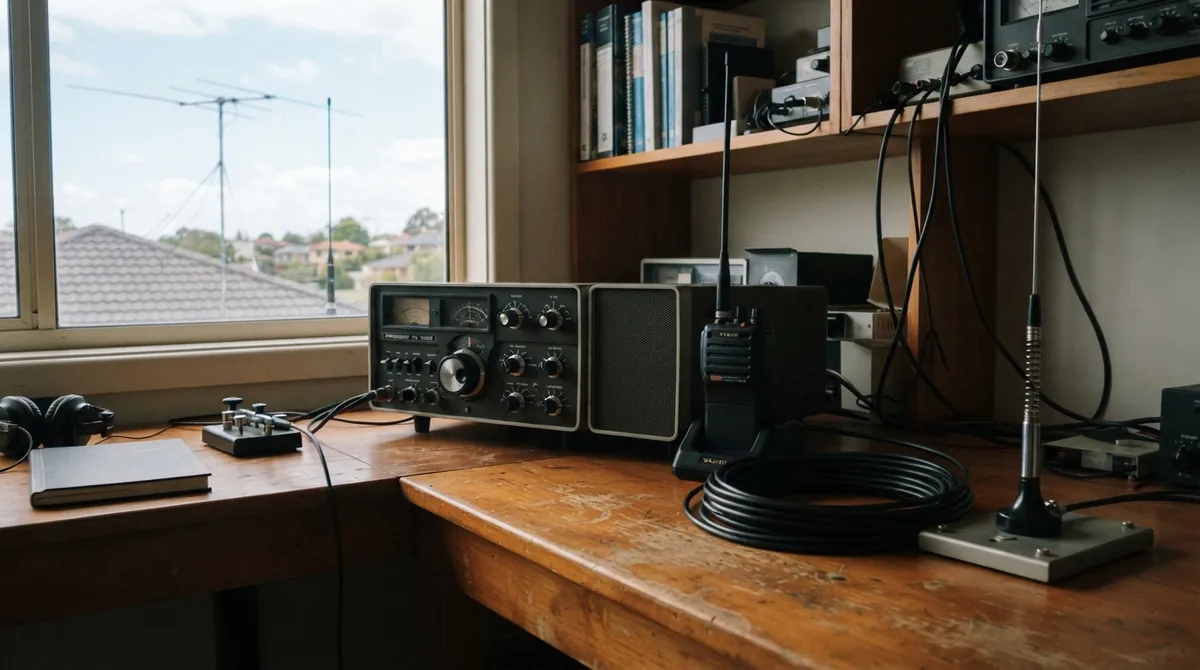
Picture a seller clearing a shelf in a home radio shack. There is a used transceiver—a radio that both receives and transmits—with a microphone, power cable, and manual. The seller knows it was bought for ham radio, posts it on eBay, and suddenly sees a request for an FCC ID or a warning that the listing cannot go live.
That feels like a ban on amateur radio, but the real change is narrower. eBay has tightened listings for radio-frequency (RF) equipment, meaning devices that send or receive signals with radio waves, after new Federal Communications Commission (FCC) requirements took effect on October 13, 2026. The dividing line is whether a radio needs FCC equipment authorization and whether it can transmit outside frequencies reserved for the Amateur Radio Service. (arrl.org)
Why eBay is asking about an FCC ID
Equipment authorization is regulatory approval for certain RF devices before they are marketed or imported. An FCC ID is the model identifier tied to a certification grant and is usually printed on a product label. It is not a person’s ham license or call sign. The license answers who may operate; equipment authorization answers whether a particular device has met the requirements for its class. (docs.fcc.gov)
Under the FCC’s July 23, 2026 Third Report and Order, online marketplaces have responsibilities for covered devices. For equipment subject to authorization, the marketplace must make authorization information, including the associated FCC ID, available in online marketing materials at the time of sale. The FCC framework includes exceptions involving existing listings, small sellers, and used equipment, but those exceptions do not necessarily guarantee approval through eBay’s own review process.
The ham-band-only exception
A ham band is a slice of radio spectrum assigned to the Amateur Radio Service, a licensed service used for communication, technical experimentation, and public-service work. The FCC has long treated most amateur radio equipment differently from many commercial transmitters. In its clarification to the American Radio Relay League (ARRL), eBay said a device capable of operating only on amateur frequencies can be listed without an FCC ID because that equipment does not require FCC authorization. External RF power amplifiers remain an important exception.
The phrase only on matters. A transceiver is not ham-band-only merely because the seller intends to use it for ham radio. If its transmitter can cover business, public-safety, or other non-amateur channels, it belongs in a different regulatory category.
A precise listing for a genuinely amateur-only device might look like this:
Transmit capability: Amateur Radio Service bands only
FCC equipment authorization: Not required for this ham-only device
FCC ID: Not applicable
Operator requirement: Appropriate amateur radio license required
Out-of-band transmit: Not supported
Modifications: None; original configuration
This template describes the equipment; it does not turn a wideband radio into a ham-only radio. If a jumper, firmware change, or service-menu option opens transmit frequencies outside amateur allocations, that capability should be disclosed. FCC enforcement guidance has treated equipment marketed as amateur gear differently when it can be easily altered for other services. (docs.fcc.gov)
Why VHF/UHF radios cause trouble
The most confusing listings often involve very high frequency (VHF) and ultra high frequency (UHF) handhelds. These compact radios can look nearly identical across amateur, business, industrial, and public-safety markets, yet their permitted transmit ranges may differ sharply.
A two-way VHF/UHF radio that can transmit outside the amateur bands cannot be imported, advertised, sold, or operated in the United States without the required FCC equipment certification. That remains true even when the radio is currently programmed with only amateur channels. A radio described as ham-capable, ham-unlocked, or useful for 2-meter and 70-centimeter operation may still be a dual-use device—a device designed for more than one radio service. (arrl.org)
A practical listing check
Before pressing Publish, work through the technical details rather than relying on the product category.
-
Check transmit range, not receive range. Many radios receive a broad span of frequencies but transmit across a much narrower one. The transmit specification is the important part for this policy.
-
Find the real FCC ID when one applies. Use the label, manual, or manufacturer documentation. Do not substitute a serial number, model number, or European compliance marking.
-
Describe modifications honestly. Mention firmware changes, opened frequency ranges, replaced boards, missing labels, or repairs that affect transmit capability. A modified radio may no longer match its original authorization.
-
Separate the license from the equipment. A ham license may be required to operate an amateur-only radio, but it does not create an FCC equipment certification for a device that needs one. The two rules answer different questions.
-
Keep evidence with the listing. A clear photograph of the model label, the manufacturer’s specifications, and a note about the supported transmit bands can make a review less ambiguous.
Why a valid listing may still get caught
eBay’s public Electronic Equipment Policy uses broad language: most equipment used to transmit or receive signals is not allowed. It specifically lists CB, or Citizen Band, amplifiers; equipment that operates in both CB and ham frequencies; and equipment not authorized by the FCC. eBay says enforcement can include removing a listing, issuing a warning, restricting activity, or suspending an account. (ebay.com)
That broad wording helps explain why a legitimate ham-only listing could still be flagged by an automated check or an overbroad review. ARRL reported that when eBay acts against a device that does not require an FCC ID and is otherwise authorized, the seller should contact eBay so the restriction can be assessed.
Can you still sell ham radio equipment on eBay without an FCC ID? Yes, when the equipment truly operates only on amateur allocations and the listing follows eBay’s rules. The new restrictions target unauthorized or dual-use transmitters, not the long-standing category of ham-band-only equipment.
For sellers, accuracy beats enthusiasm. Name the model, state the transmit bands, disclose modifications, and distinguish operator licensing from equipment authorization. In this corner of radio, ham-friendly is a marketing phrase; the actual frequency range is the fact that decides the listing.
Comments (0)
No comments yet. Be the first to respond!
Leave a Comment
Your comment will be visible after review.