CO2: The Invisible Bottleneck Behind Decision-Making
 by ahsan
July 04, 2026
1 min read
by ahsan
July 04, 2026
1 min read
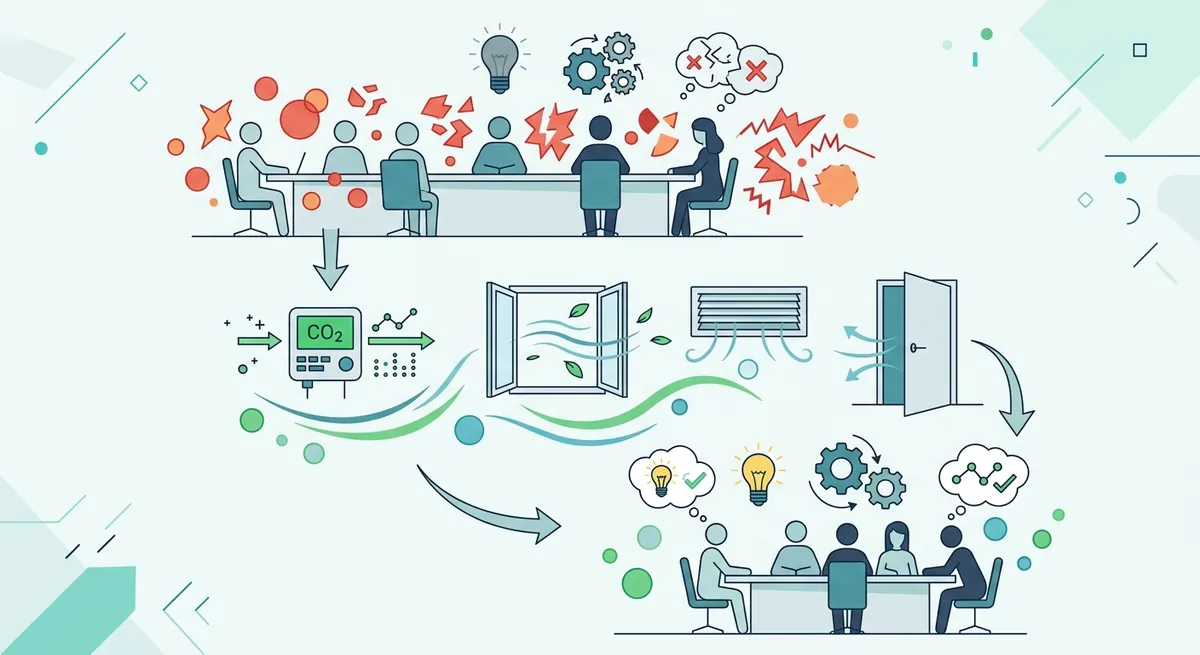
The moment the room gets worse
Picture a planning session with your best people. The first hour feels productive: ideas land, disagreements stay respectful, and decisions start forming. Then, without anyone declaring it, momentum fades. People get quieter. The conversation loops. Riskier options suddenly feel “too much.”
Most teams explain this slide using human stories—fatigue, stress, meeting culture, or personalities. Those stories may be partly true, but they miss an environmental variable hiding in plain sight: the air.
The key signal is carbon dioxide (CO2), a gas humans exhale. CO2 doesn’t just indicate ventilation quality; it tracks how “stale” and crowded the breathing environment has become. And that matters because question after question in meeting work requires sustained attention, working memory, and careful judgment.
So what changes when CO2 rises? A great practical question—because you can actually measure CO2—is: Why does higher CO2 make it harder to think clearly?
Comments (0)
No comments yet. Be the first to respond!
Leave a Comment
Your comment will be visible after review.